
Road Tripping on a Budget: Planning a Family Drive Across the US

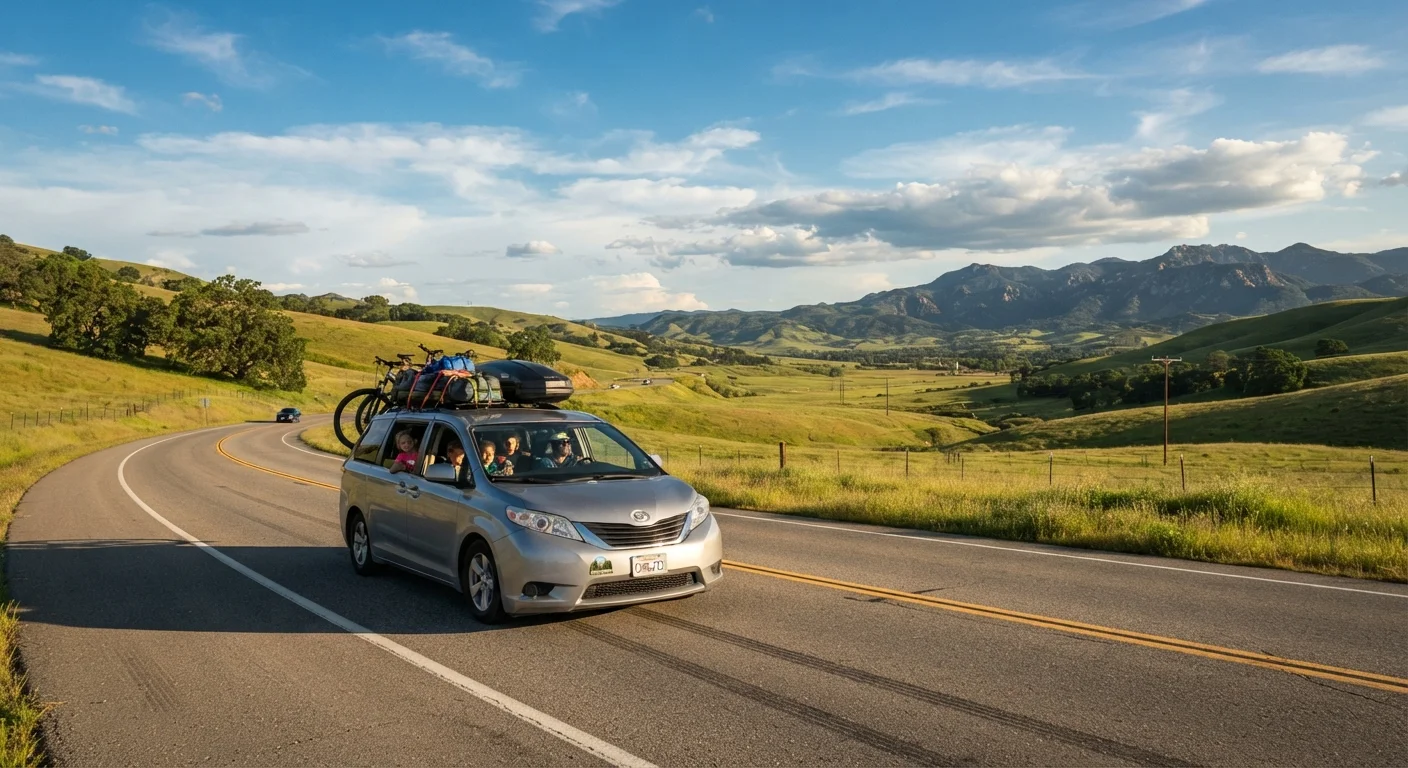
Photo: balancedlivingtools.net editorial
Key Takeaways
- Driving often costs less per person than flying once luggage fees and ground transport are factored in.
- Route choice shapes your total trip cost more than almost any other single decision.
- Packing a cooler and planning grocery stops can cut daily food spending significantly.
- Camping and budget motels each have cost advantages depending on family size and season.
- National parks, state parks, and free city attractions stretch your entertainment dollar further.
- Off-season travel reduces lodging and campsite costs and thins out crowds at popular stops.
Why road trips often beat flying for families
Flying a family of four across the country involves ticket prices, baggage fees, car rentals at the destination, and the general hassle of airport logistics. When you add those up, driving frequently comes out ahead on total cost, and the flexibility is hard to match. A road trip lets you stop where you want, carry everything you need, and skip the fees that pile up quickly when traveling with kids.
That said, distance matters. For routes over roughly 1,500 miles one-way, the math can shift. Our breakdown of driving vs. flying costs walks through the numbers in detail if you want to compare your specific trip before committing.
Road trips also give families something harder to quantify: the journey itself becomes part of the experience. Roadside attractions, small-town diners, and unexpected detours are the kinds of memories that stick. For value-seeking families, that combination of lower cost and richer experience is a strong case for putting miles on the odometer.
Choosing a route that fits your budget
Route selection affects fuel costs, lodging availability, and what your family can do for free along the way. Some routes pass through areas with dense public land, free campsites, and national parks, while others run through expensive metro corridors where even a motel stay gets pricey.
A few approaches that tend to keep costs lower:
- Plan around national parks and national forests, where entrance fees are modest and camping is often inexpensive. The parks that offer the most family value guide covers which ones give you the most for your entrance fee.
- Use state highways instead of toll roads where the time difference is small. Tolls on major corridors add up quickly for a cross-country drive.
- Avoid routing through expensive cities unless a specific attraction justifies the overnight cost. Stopping just outside a city and driving in for the day often saves $50 or more per night on lodging.
Shoulder-season timing (spring and fall) also makes a real difference. Traveling outside peak season lowers campsite and motel rates and reduces wait times at popular stops, though some seasonal services may be limited.
Map your overnight stops before you leave and identify the two or three cheapest lodging options at each location. Flexibility is valuable, but having a fallback list prevents panic-booking expensive rooms after a long driving day.
Build one short driving day into every three or four long ones. A 3-4 hour drive instead of an 8-hour push lets the family recover, reduces driver fatigue, and gives you time to explore a stop you might otherwise blast through.
Cutting fuel costs before and during the drive
Fuel is often the single largest line item on a road trip budget. Before departure, check tire pressure and make sure your vehicle is caught up on basic maintenance. Underinflated tires reduce fuel efficiency in ways that are easy to fix and easy to overlook. If you want a fuller picture of what actually improves mileage and what does not, the science behind common fuel efficiency myths is worth reading before you load the car.
During the drive, highway speed has a direct effect on fuel consumption. Most vehicles burn noticeably more fuel above 65-70 mph, so staying at posted limits on long stretches is both legal and economical. Using cruise control on flat highway sections also helps maintain a steady speed and typically beats the subtle throttle fluctuations that come from manual driving.
Gas price apps let you see prices at upcoming stations so you can fill up where it costs less rather than waiting until the tank is nearly empty and taking whatever is available. Planning fill-ups around lower-cost stations on your route is a small habit that adds up over a long trip.
For families thinking about the broader cost of running a vehicle, strategies for reducing every major car ownership expense covers fuel, insurance, and maintenance in one place.
Lodging options that keep the budget intact
Lodging is where road trip budgets diverge most sharply. The two main paths are camping and budget motels, and each has real advantages depending on your family's setup and the season.
Camping at state and national parks is often the lower-cost option for families with gear, especially if you have a tent or a rooftop setup. Campsite fees at many state parks run $20-$35 per night, which is a fraction of a motel room. National forest dispersed camping (camping outside designated campgrounds on eligible forest land) can be free, though you need to check current rules for the specific area. Our camping vs. budget hotels comparison looks at which option saves more in different scenarios.
Budget motels work well when camping is not practical, such as during rainy stretches or when you need a clean bathroom and a reliable Wi-Fi connection. Booking a night or two in advance, rather than the day of, usually secures a lower rate. Arriving in smaller towns instead of city centers makes a meaningful difference in nightly cost.
Mixing the two approaches across a trip is practical and common. A few nights camping followed by a motel night works well as a reset, especially with younger kids who need a reliable bath situation.
Feeding the family without fast food every night
Food spending is the easiest budget category to lose track of on a road trip. Drive-through stops feel minor individually but can reach $50-$70 per meal for a family of four. Over a week-long trip, that adds up fast.
A cooler packed before departure is the most effective single tool for keeping food costs down. Hard-boiled eggs, sliced vegetables, sandwiches, fruit, and cheese travel well and require no cooking equipment. Grocery store stops every two to three days let you restock without eating every meal at a restaurant.
Stock the cooler before you leave home
When the family does eat out, lunch at a sit-down restaurant is usually cheaper than dinner at the same place. Many spots offer lunch portions at a lower price point than their evening menu. Small local diners near state highways frequently cost less than chain restaurants on interstate exits and often serve larger portions.
For entertainment ideas that do not cost much once you arrive at a destination, free and low-cost activities in popular US cities has practical options city by city.
Free and low-cost stops along the way
A cross-country drive does not need paid attractions at every stop to feel full. The US has an enormous amount of public land, free historic sites, and no-cost experiences that are genuinely worth stopping for.
National park entrance passes (the America the Beautiful annual pass, available through the National Park Service) cover entry to hundreds of federal sites for a single annual fee, which pays for itself quickly on a longer trip. Many state parks charge no entry fee at all, or a small day-use fee per vehicle. Roadside geology, scenic overlooks, and historic markers along federal and state highways are free by definition.
For families who want a broader list organized by season, free and low-cost activities across every season covers options that go beyond the road trip itself. And if packing for all of it feels overwhelming, what families routinely overpack and underpack offers a practical pre-departure checklist.
The goal is a trip where the family spends more time outside and less time worrying about the bill at each stop. With a solid route, a stocked cooler, and a mix of public land and the occasional motel, that is genuinely achievable for most American families.
The content provided on our blog site traverses numerous categories, offering readers valuable and practical information. Readers can use the editorial team’s research and data to gain more insights into their topics of interest. However, they are requested not to treat the articles as conclusive. The website team cannot be held responsible for differences in data or inaccuracies found across other platforms. Please also note that the site might also miss out on various schemes and offers available that the readers may find more beneficial than the ones we cover.