
Cutting Your Grocery Bill With a Backyard Vegetable Garden

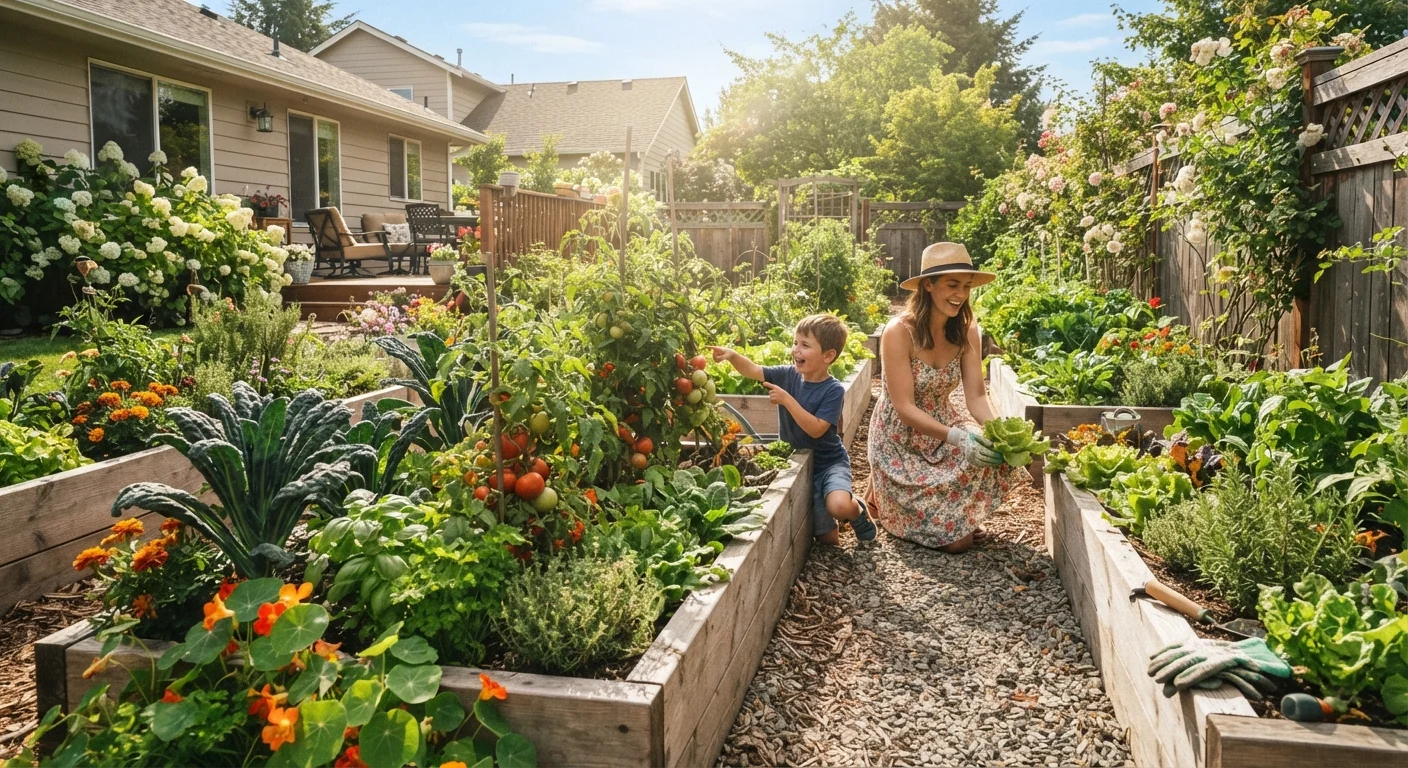
Photo: balancedlivingtools.net editorial
Key Takeaways
- High-yield crops like lettuce, tomatoes, and herbs return the most value per square foot of garden space.
- Upfront setup costs vary widely depending on whether you use raised beds, containers, or in-ground planting.
- Composting kitchen scraps can significantly reduce the ongoing cost of soil amendments.
- Pairing a garden with meal planning reduces food waste and makes savings more predictable.
- Crops that are expensive in stores but easy to grow offer the fastest return on gardening investment.
Why grocery savings and vegetable gardens go together
Fresh produce is consistently among the most expensive line items in a family grocery budget, and prices for items like tomatoes, fresh herbs, and salad greens fluctuate significantly by season and region. A home vegetable garden addresses that cost at the source by replacing purchased produce with home-grown food.
The savings logic is straightforward. A single basil plant that costs a few dollars to start from seed can yield far more usable leaves than the pre-cut packages sold in stores, which spoil quickly and carry a price premium for convenience. The same principle holds for crops like lettuce, cherry tomatoes, and green beans. When paired with consistent grocery habits, a garden becomes one component of a broader strategy that compounds over multiple seasons.
The financial case is strongest when families grow what they already buy regularly. A garden full of vegetables that sit unused does not reduce spending. Connecting the garden to a weekly meal planning system helps ensure that what gets planted actually gets eaten.
Which crops deliver the most value per square foot
Not every vegetable is equally efficient. Some crops occupy a lot of space for a modest harvest, while others produce continuously over weeks or months from a compact footprint.
- Salad greens (lettuce, arugula, spinach): Cut-and-come-again varieties regrow after harvest, extending yield from a single planting. Store prices for mixed greens are high relative to seed cost.
- Tomatoes: A single healthy plant can produce 10 to 20 pounds of fruit over a season. Cherry tomato varieties tend to be especially productive and are sold at a premium in stores.
- Herbs (basil, parsley, chives, cilantro): Fresh herbs are among the most expensive items per ounce at grocery stores. Growing them at home eliminates repeated small purchases that add up quickly.
- Zucchini and summer squash: These are high-yield plants that require relatively little care once established, though a single plant often produces more than one family can use.
- Green beans: Bush varieties produce a concentrated harvest; pole varieties produce over a longer window and make good use of vertical space.
Focus on what you already buy
Crops that take the most time and space without proportional yield include corn, melons, and pumpkins. These may be satisfying to grow, but families focused on grocery savings usually get better returns from the crops listed above.
Understanding your actual setup costs
A vegetable garden does require some upfront investment, and being realistic about those costs prevents disappointment. The three main approaches each carry different price ranges.
In-ground planting has the lowest material cost. If your soil is workable and gets adequate sun, amending an existing bed with compost is often the main expense. However, soil quality, drainage, and pest pressure vary considerably by location.
Raised beds cost more to build or buy initially, but they give you direct control over soil quality, drain well, and warm up faster in spring. Lumber prices fluctuate, but building a basic 4x8 raised bed is a common DIY project that many families complete for a modest amount. Repurposing containers and household materials can lower that cost further.
Container gardening works well on patios or in yards with poor soil. Fabric grow bags, large buckets, and reused containers all work. The recurring cost is potting mix, which dries out faster than in-ground soil and may need refreshing each season.
Across all three approaches, home composting reduces the ongoing cost of fertilizer and soil amendment. Starting a compost system alongside your garden is one of the most cost-effective long-term decisions a family can make.
Making the most of limited space and time
Families with small yards, limited time, or partial shade can still grow meaningful amounts of food. The goal is to match crop selection to actual conditions rather than attempting a large garden that becomes unmanageable.
Succession planting, where you sow a small amount every two to three weeks instead of all at once, prevents the common problem of having more produce than you can use in one week followed by nothing for a month. It also extends the harvest window for crops like lettuce and radishes through a larger portion of the season.
Vertical growing (trellises, cages, or simple stakes for climbing plants) adds productive space without expanding the garden's footprint. Pole beans, cucumbers, and small-fruited squash all adapt well to vertical support.
For families new to vegetable gardening, starting seeds indoors for certain crops extends the growing season and reduces the need to buy transplants at a higher cost. Tomatoes and peppers are the most common candidates for this approach in most US climates. Pairing that with an honest look at what your family reliably eats, not just what looks appealing in seed catalogs, keeps the garden connected to real grocery savings rather than gardening ambition. The relationship between food cost and nutrition is worth understanding alongside any garden plan, since home-grown produce can support both goals at once.
Frequently Asked Questions
The content provided on our blog site traverses numerous categories, offering readers valuable and practical information. Readers can use the editorial team’s research and data to gain more insights into their topics of interest. However, they are requested not to treat the articles as conclusive. The website team cannot be held responsible for differences in data or inaccuracies found across other platforms. Please also note that the site might also miss out on various schemes and offers available that the readers may find more beneficial than the ones we cover.