
Mulch, Rock, or Ground Cover: Choosing the Right Yard Base for Your Budget

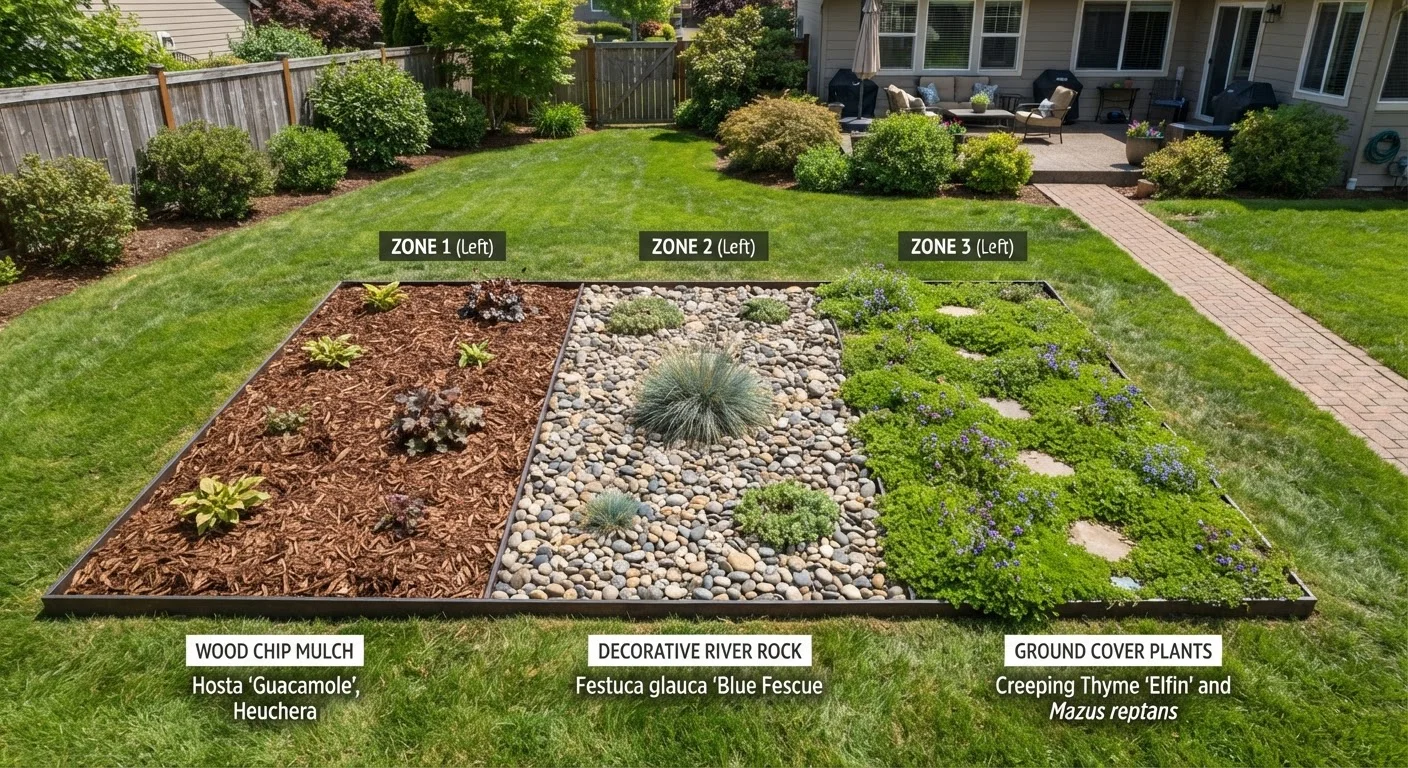
Photo: balancedlivingtools.net editorial
Key Takeaways
- Mulch costs less upfront but needs replenishment every one to three years, adding to long-term spending.
- Decorative rock has a higher initial price but rarely needs replacement, making it cost-effective over a decade.
- Living ground covers like creeping thyme or clover can reduce water and fertilizer costs once established.
- Soil type, climate, and sun exposure all affect which material actually performs well in a given yard.
- Layering landscape fabric under rock or mulch reduces weed pressure and extends the life of any installation.
What each option actually costs
Understanding the price of each material requires separating the purchase cost from the total cost of ownership over several years.
Bulk wood chip mulch typically runs $25 to $50 per cubic yard when purchased from a landscape supplier, and a standard 3-inch layer over 100 square feet uses roughly one cubic yard. Bagged mulch from hardware stores costs more per unit volume but allows smaller purchases. Because mulch breaks down, most yards need a fresh layer every one to three years depending on material type and climate.
Decorative rock, including pea gravel or river rock, generally costs $50 to $100 per cubic yard for material alone, with delivery fees added on larger orders. That higher purchase price is offset by durability: rock does not decompose and rarely needs replacement. Over ten years, rock often costs less per year than mulch when replenishment cycles are factored in.
Living ground covers such as creeping thyme, clover, or ajuga start as plugs or seeds. Plugs run roughly $1 to $4 each, and full coverage for a 100-square-foot area may need 25 to 50 plants spaced several inches apart. Seed mixes cost far less but take longer to establish. Once plants knit together, ongoing material costs drop significantly.
| Mulch | Decorative rock | Living ground cover | |
|---|---|---|---|
| Typical upfront cost per 100 sq ft | $10 to $30 | $40 to $80 | $25 to $100 (plugs) |
| Replacement frequency | Every 1 to 3 years | Rarely, lasts 10+ years | Minimal once established |
| Weed suppression | Good when fresh | Moderate | Strong when mature |
| Soil health impact | Adds organic matter | Neutral to negative | Variable, some add nitrogen |
| Water retention | High | Low | Moderate |
| Best climate fit | Most US climates | Arid and hot regions | Depends on species |
| First-year labor | Low | Moderate (installation) | High (establishment) |
Maintenance demands over time
Mulch suppresses weeds well in the short term, but its effectiveness drops as it thins and decomposes. Plan for annual top-dressing and periodic weed pulling. The decomposition process does add organic matter to soil, which supports plant health and can reduce the need for fertilizer. If your yard includes vegetable beds, that soil-building aspect has real value. See how mulch fits into a broader soil strategy in our guide on home composting from kitchen scraps.
Rock beds need less frequent attention but are not maintenance-free. Debris, leaves, and wind-blown soil collect between stones over time, creating pockets where weeds can root. Blowing or raking rock areas a few times a year keeps them tidy. Rock also absorbs heat, which can stress nearby plants in hot climates and raise soil temperature around shallow-rooted shrubs.
Living ground covers demand the most attention during the first growing season: watering, weeding, and monitoring for gaps. After two to three years, a well-established cover substantially reduces weed pressure on its own. Some varieties, like white clover, fix nitrogen from the air and reduce fertilizer needs. That long-term reduction in inputs is where living covers earn back their establishment cost.
How climate and soil affect the decision
Mulch performs well across most US climates. In hot, dry regions it retains soil moisture, which can lower irrigation frequency. In wet climates, thick mulch layers can stay too damp and promote fungal problems near plant crowns, so keeping mulch several inches away from stems and trunks matters. Reviewing common lawn care myths can help you avoid over-mulching, which is a frequent and costly mistake.
Rock works well in arid climates, where it blends with the natural landscape and does not hold excess moisture. In humid or rainy regions, rock beds can stay wet longer than expected, and the heat they absorb may not be a benefit during cool growing seasons. Homeowners in northern states sometimes find rock beds frost-heave over winter, shifting stones and requiring redistribution in spring.
Living ground covers depend heavily on sun exposure, soil type, and USDA hardiness zone. Creeping thyme tolerates drought and poor soil but needs full sun. Pachysandra thrives in shade and moist soil. Matching the plant to the actual conditions in a specific bed determines whether the cover fills in reliably or struggles and leaves gaps for weeds. Local cooperative extension offices publish free zone-specific plant guides that are worth consulting before purchasing.
Making the most of any yard base on a budget
Mixing materials strategically can lower overall cost without sacrificing performance. Rock works well in high-traffic paths and slopes where erosion is a risk. Mulch fits planting beds where soil nutrition matters. Living covers are practical in low-traffic border areas where a two-season establishment period is acceptable.
Installing landscape fabric before placing mulch or rock reduces weed breakthrough and extends the effective life of both materials. The fabric itself costs $0.10 to $0.30 per square foot and can meaningfully reduce the labor and weed-killer cost over several years.
Free or low-cost mulch is available through several channels. Many municipal tree services offer wood chip drop-offs at no charge. Some cities run composting programs that distribute finished compost or mulch to residents. Checking local community boards or contacting your parks department directly is a practical first step.
If you are planning a vegetable garden alongside decorative beds, keeping mulched pathways between rows serves both aesthetic and functional purposes. That approach is covered in more detail in our article on cutting your grocery bill with a backyard vegetable garden. For creative ways to define bed borders without buying commercial edging, repurposing household items for garden use offers practical alternatives.
The content provided on our blog site traverses numerous categories, offering readers valuable and practical information. Readers can use the editorial team’s research and data to gain more insights into their topics of interest. However, they are requested not to treat the articles as conclusive. The website team cannot be held responsible for differences in data or inaccuracies found across other platforms. Please also note that the site might also miss out on various schemes and offers available that the readers may find more beneficial than the ones we cover.