
Home Composting From Kitchen Scraps to Garden Soil

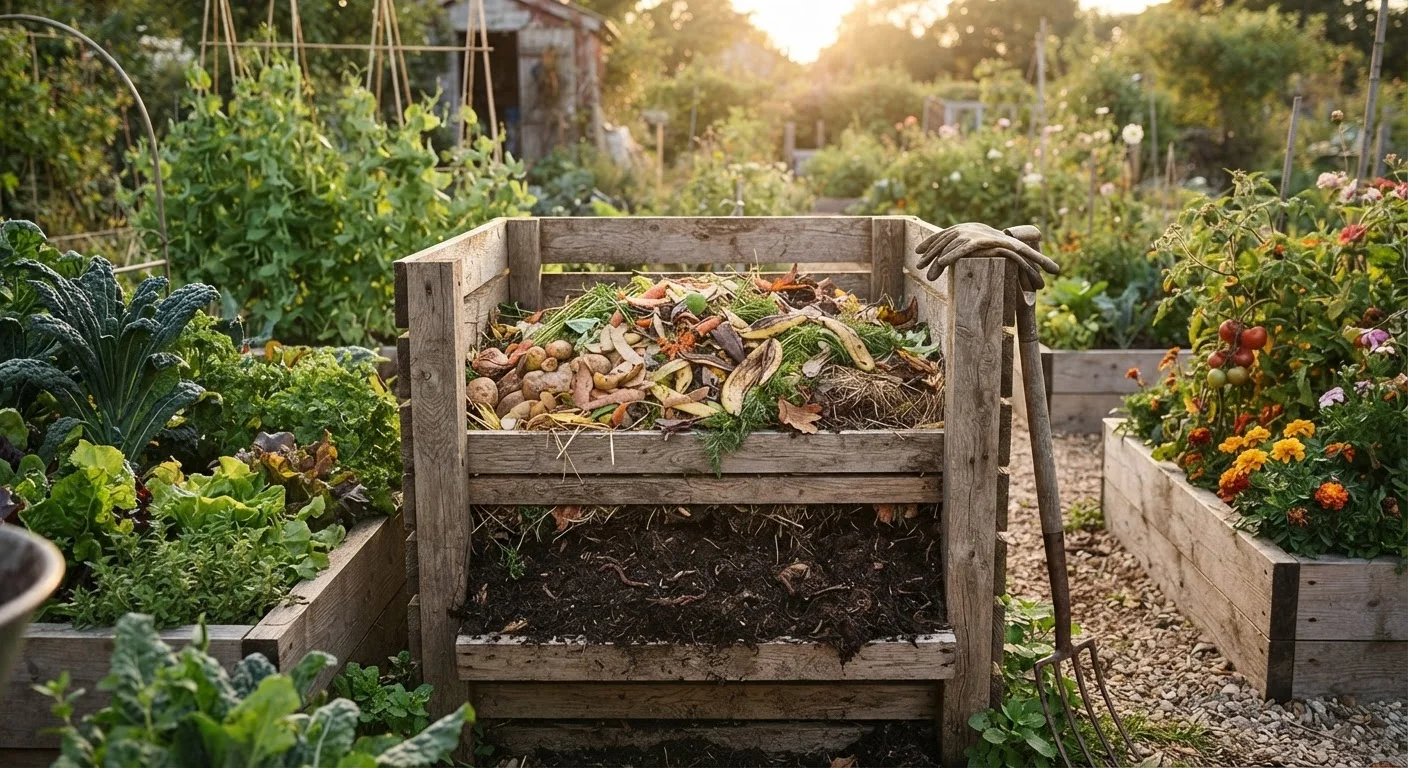
Photo: balancedlivingtools.net editorial
Key Takeaways
- Composting converts kitchen and yard waste into free soil amendment, reducing the need to buy bagged compost.
- A working compost pile needs a balance of carbon-rich browns and nitrogen-rich greens, plus moisture and air.
- A simple DIY bin made from pallets or wire mesh costs little to nothing to build.
- Finished compost is ready when it looks, smells, and crumbles like dark soil with no recognizable scraps.
- Compost improves soil structure and feeds plants slowly, making it useful across vegetable beds, lawn, and containers.
Why composting makes financial sense for families
Bagged compost and soil amendment products sold at garden centers can cost several dollars per cubic foot. A family with a vegetable bed, lawn area, and a few containers can spend $50 to $150 or more each season on those inputs alone. Composting at home converts material that would otherwise go to the landfill into the same product at no ongoing cost.
The savings extend beyond the garden. Less food waste in the trash can reduce how often bags are filled, and organic material that decomposes in a landfill produces methane, a greenhouse gas. Composting processes that same material aerobically, producing far less of it.
If your household already follows a meal plan and shops deliberately, composting is a natural extension of that approach. The meal planning habits that reduce grocery waste also generate a steady, manageable stream of compostable scraps rather than large, irregular batches.
Finished compost also reduces dependence on other purchased inputs. When worked into soil before planting, it can lower how much bagged fertilizer a bed needs over the course of a season, though results depend on your existing soil quality and what you grow.
What to add and what to keep out
Every compost pile needs two categories of material in rough balance: browns and greens.
Browns
Carbon-rich materials such as dried leaves, cardboard, straw, and paper that provide energy for decomposing microbes and keep the pile from getting soggy.
Greens
Nitrogen-rich materials such as vegetable scraps, coffee grounds, grass clippings, and fresh plant trimmings that fuel microbial activity.
Hot composting
An active method that uses frequent turning and a balanced mix of materials to generate internal heat, which speeds decomposition and kills weed seeds.
Vermicomposting
Composting with worms (usually red wigglers) in a contained bin. The worms process food scraps into a nutrient-dense material called worm castings.
Worm castings
The nutrient-rich material produced by worms as they digest organic matter. It is one of the most concentrated natural soil amendments available.
Soil amendment
Any material mixed into soil to improve its structure, drainage, water retention, or nutrient content. Finished compost is a general-purpose soil amendment.
Browns include dried leaves, cardboard torn into pieces, paper bags, newspaper, and straw. Greens include raw vegetable and fruit scraps, coffee grounds and filters, tea bags without staples, eggshells, fresh grass clippings, and plant trimmings. A ratio of roughly two to three parts browns for every one part greens by volume gives microbes what they need without creating a soggy, airless pile.
Do not add these materials to a home pile
Eggshells are worth adding even though they decompose slowly. They contribute calcium and help neutralize acidity over time. Coffee grounds, despite their brown color, count as a green because of their nitrogen content.
Choosing a composting setup
The right setup depends on available space and how much material a household generates each week.
Open pile or DIY bin: A simple pile in a back corner of the yard works, though a contained bin holds heat better and looks tidier. Wire mesh formed into a cylinder, or wooden pallets wired together into a three-sided enclosure, costs little to nothing. See our article on repurposing household items for the garden for ideas on building a bin from materials you may already have.
Tumbler bins: A rotating drum mounted on a frame speeds decomposition by making it easy to turn the pile. Tumblers also deter pests more reliably than open bins. They cost more upfront but suit smaller yards and households that prefer less contact with the pile.
Vermicomposting (worm bin): A plastic storage bin with drainage holes, bedding material, and red wiggler worms can sit in a garage, basement, or even under a kitchen sink. Worms process food scraps directly into worm castings with no outdoor space required. This method is well-suited to apartments or households without yard waste to balance the pile.
Keep a small container near the sink
Managing your pile for faster results
Moisture and aeration determine how fast a pile breaks down. The pile should feel about as damp as a wrung-out sponge. If it is dry, add water or more greens. If it is soggy and smells sour or sulfurous, add browns and turn it to introduce air.
Turning the pile moves outer material to the center where temperatures are highest. For hot composting, turning every one to two weeks can accelerate the process. For a hands-off approach, turning once a month still produces finished compost, just more slowly.
Particle size matters. Smaller pieces decompose faster because microbes have more surface area to work on. Chopping or shredding scraps before adding them, and tearing cardboard into hand-sized pieces, measurably speeds things up without requiring any special equipment.
A pile that never heats up usually lacks nitrogen. Adding fresh grass clippings or more kitchen scraps typically restores activity. A pile that heats up but never seems to finish may be too dry or too large to turn thoroughly.
Using finished compost in the garden
Finished compost is dark, crumbles like loose soil, smells earthy, and contains no recognizable food scraps or paper pieces. If the pile still has identifiable materials, give it more time or sift finished compost away from material that needs longer to break down.
Compost adds nutrients slowly
In vegetable beds, work 2 to 3 inches of compost into the top 6 to 8 inches of soil before planting each season. This is especially useful in beds that have been cultivated for several years and have lost organic matter. Pairing compost with a well-designed planting plan, like the approach in growing vegetables to reduce grocery costs, extends the value of both practices.
As a top dressing, compost can be spread around established plants and left on the surface. Rain and soil organisms will gradually incorporate it. This works well for perennial beds, fruit bushes, and lawn areas where tilling is not practical.
For containers and seed-starting mixes, use compost as one component blended with other materials rather than filling pots entirely. Pure compost can compact and hold too much water for seedlings. See which seed-starting mixes work best indoors for guidance on proportions that support germination.
Frequently Asked Questions
The content provided on our blog site traverses numerous categories, offering readers valuable and practical information. Readers can use the editorial team’s research and data to gain more insights into their topics of interest. However, they are requested not to treat the articles as conclusive. The website team cannot be held responsible for differences in data or inaccuracies found across other platforms. Please also note that the site might also miss out on various schemes and offers available that the readers may find more beneficial than the ones we cover.