
Gas Mileage Myths That Families Still Believe (And What the Science Says)

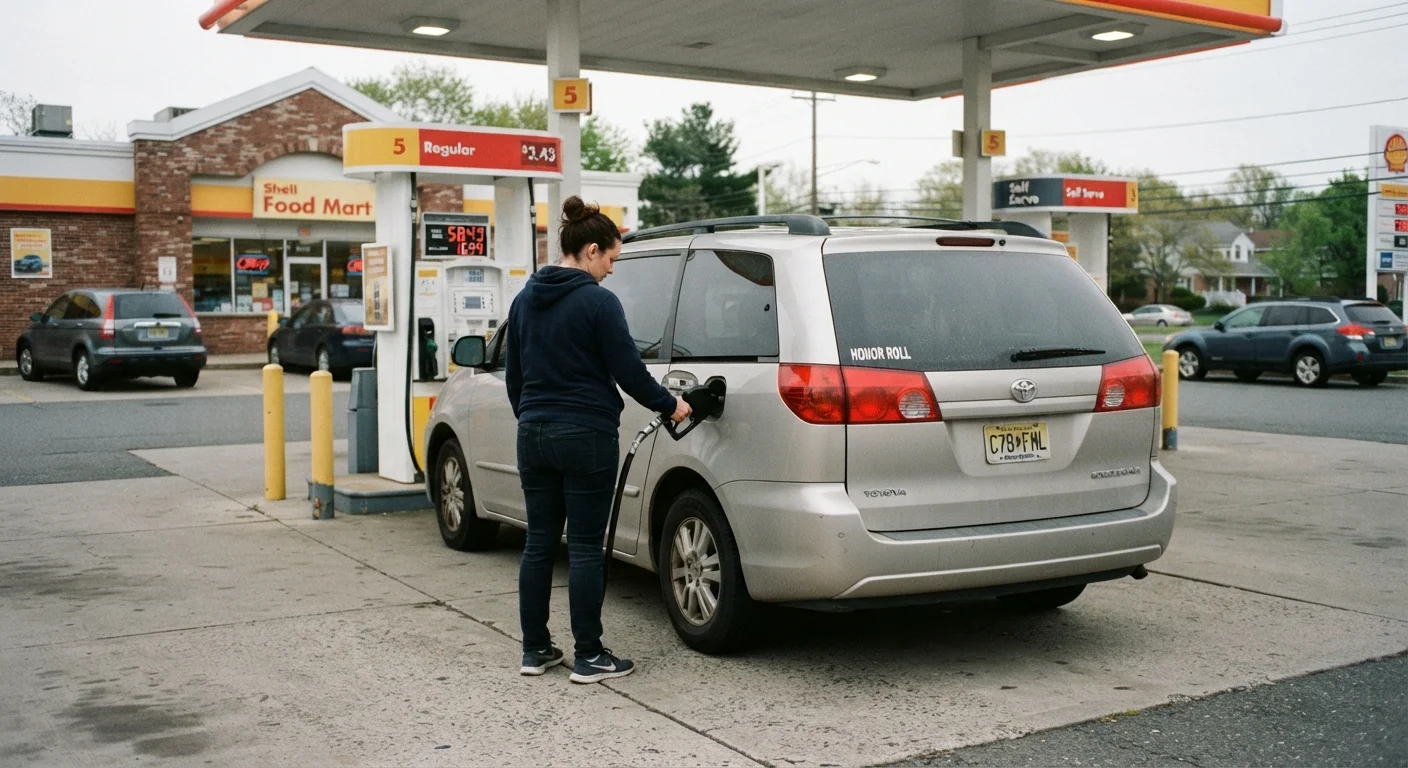
Photo: balancedlivingtools.net editorial
Key Takeaways
- Premium fuel does not improve efficiency or performance in engines designed for regular unleaded.
- Idling your car to warm it up wastes fuel and is unnecessary with modern fuel-injected engines.
- Aggressive acceleration and late braking are among the biggest causes of real-world fuel waste.
- Roof racks and open windows at highway speeds measurably increase aerodynamic drag and fuel use.
- Tire pressure has a direct, documented effect on fuel economy and is easy to check at home.
Why fuel myths cost families real money
Fuel is one of the largest recurring costs of vehicle ownership. For a family driving 15,000 miles a year in a vehicle averaging 25 miles per gallon, a 10 percent improvement in fuel economy saves roughly $150 to $200 annually at average national gas prices. That matters. The problem is that many families apply fuel-saving habits that engineers and vehicle researchers have consistently found to be ineffective or counterproductive.
Separating folklore from fact does not require a mechanic's credential. It requires knowing what vehicle systems actually control fuel consumption and what the evidence shows. Fuel is only one part of total ownership cost, but it is one of the few areas where driver behavior directly shifts the number up or down.
Myth
Using premium gasoline in a regular-grade engine gives better mileage and protects the engine.
Fact
Premium fuel produces no efficiency or performance benefit in engines not designed to require it.
Engine computers in vehicles rated for regular unleaded are calibrated for that fuel's octane level. Premium fuel has a higher octane rating, which resists pre-ignition (engine knock) at high compression ratios. If the engine does not operate at those compression ratios, the extra octane does nothing. The U.S. Department of Energy confirms that using premium in a regular-rated engine does not improve fuel economy or engine longevity. Families who make this switch spend more at the pump with no measurable return.
Myth
You should let your car idle for several minutes to warm up the engine before driving, especially in winter.
Fact
Modern fuel-injected engines warm up faster under light driving load than they do at idle, and prolonged idling wastes fuel.
Carbureted engines, common before the mid-1980s, needed warm-up time because carburetors mixed fuel and air mechanically and performed poorly when cold. Fuel injection replaced that system, and the engine management computer adjusts the fuel mixture automatically based on temperature sensors. Idling a fuel-injected engine for five minutes before driving burns fuel while doing less to bring the engine to operating temperature than gentle driving does. In very cold climates, 30 to 60 seconds of idle to allow oil pressure to stabilize is reasonable, but extended idling is counterproductive and adds unnecessary emissions.
Myth
Turning the air conditioner off and opening the windows always saves fuel.
Fact
At highway speeds, open windows create enough aerodynamic drag to offset or exceed the fuel saved by cutting the A/C.
This tradeoff is speed-dependent. At low urban speeds, the A/C compressor load on the engine costs more fuel than the minor drag from open windows, so turning it off helps. At highway speeds above roughly 45 to 50 mph, open windows significantly increase the vehicle's drag coefficient, which forces the engine to work harder to maintain speed. Research from organizations including SAE International has examined this crossover point, and the consensus is that at sustained highway speeds, running the A/C with windows closed is comparable to, or sometimes more efficient than, opening windows. The exact breakeven depends on the vehicle's aerodynamic profile.
Myth
Filling up when the tank is half full prevents fuel evaporation and saves money.
Fact
Modern vehicles have sealed evaporative emissions systems that prevent fuel vapor loss regardless of tank level.
Older vehicles without sealed fuel systems did lose some fuel to evaporation, particularly in hot weather. Vehicles built under modern emissions standards use a closed evaporative emissions control (EVAP) system with a charcoal canister that captures vapors and routes them back into the engine. The tank level does not affect evaporation losses in these systems. Filling frequently in small amounts does not save fuel; it simply means more trips to the pump. The one genuine fuel habit related to hot weather is parking in shade to reduce ambient heat inside the fuel system, which can reduce vapor pressure in extreme conditions.
Myth
Carrying a roof rack improves convenience and has no real effect on fuel costs.
Fact
An empty roof rack adds aerodynamic drag that measurably reduces highway fuel economy.
A bare roof rack with no cargo can reduce highway fuel economy by 2 to 8 percent depending on vehicle shape and rack design, based on Department of Energy data. Cargo carriers and rooftop boxes cause larger reductions. Families who leave roof racks mounted year-round because removal is inconvenient pay a consistent fuel penalty. Removing the rack when it is not in use is a straightforward step with a direct fuel cost benefit, particularly for families who drive substantial highway miles.
Myth
Tire pressure does not affect fuel economy in any practical way.
Fact
Under-inflated tires increase rolling resistance, and the Department of Energy estimates fuel economy drops approximately 0.2 percent for every 1 psi drop below recommended pressure.
Rolling resistance is the friction a tire generates as it deforms against the road surface. Under-inflated tires deform more with each rotation, requiring the engine to work harder to maintain speed. The correct pressure is listed on the vehicle's door jamb sticker (not the tire sidewall, which shows maximum pressure). Tire pressure also drops naturally in cold weather: roughly 1 psi for every 10 degrees Fahrenheit of temperature decrease. Checking pressure monthly and before long trips is one of the lowest-effort steps available to maintain fuel economy. A quality tire gauge costs a few dollars and the check takes under five minutes.
Driving habits that actually move the needle
Vehicle engineers measure fuel consumption in real operating conditions, not just on test cycles. The behaviors that consistently show the largest impact are acceleration rate, braking frequency, and steady highway speed. Hard acceleration burns significantly more fuel per mile than gradual acceleration to cruising speed, because the engine demands peak fuel flow during rapid throttle opening. Anticipating stops and coasting to a deceleration rather than braking at the last moment preserves momentum and reduces how often the engine must work hard to rebuild speed.
Highway speed is the other major lever. Most vehicles reach peak aerodynamic drag much faster than drivers realize. The U.S. Department of Energy has noted that fuel economy typically drops off noticeably above 50 miles per hour, and each 5 mph increment above that range adds measurably to cost per mile. For long family drives, cruise control on flat terrain helps maintain a steady speed and avoids the unconscious speed creep that increases fuel use over hours of driving. Planning a road trip with fuel efficiency in mind can stretch a tank considerably further across hundreds of miles.
Reducing fuel costs is one part of a broader strategy for lowering ownership expenses that includes maintenance, insurance, and financing. Getting the driving habits right is the part that costs nothing to change.
Don't ignore the check engine light for EVAP codes
The content provided on our blog site traverses numerous categories, offering readers valuable and practical information. Readers can use the editorial team’s research and data to gain more insights into their topics of interest. However, they are requested not to treat the articles as conclusive. The website team cannot be held responsible for differences in data or inaccuracies found across other platforms. Please also note that the site might also miss out on various schemes and offers available that the readers may find more beneficial than the ones we cover.