
Packing Smart: What Families Routinely Overpack and Underpack for Road Trips

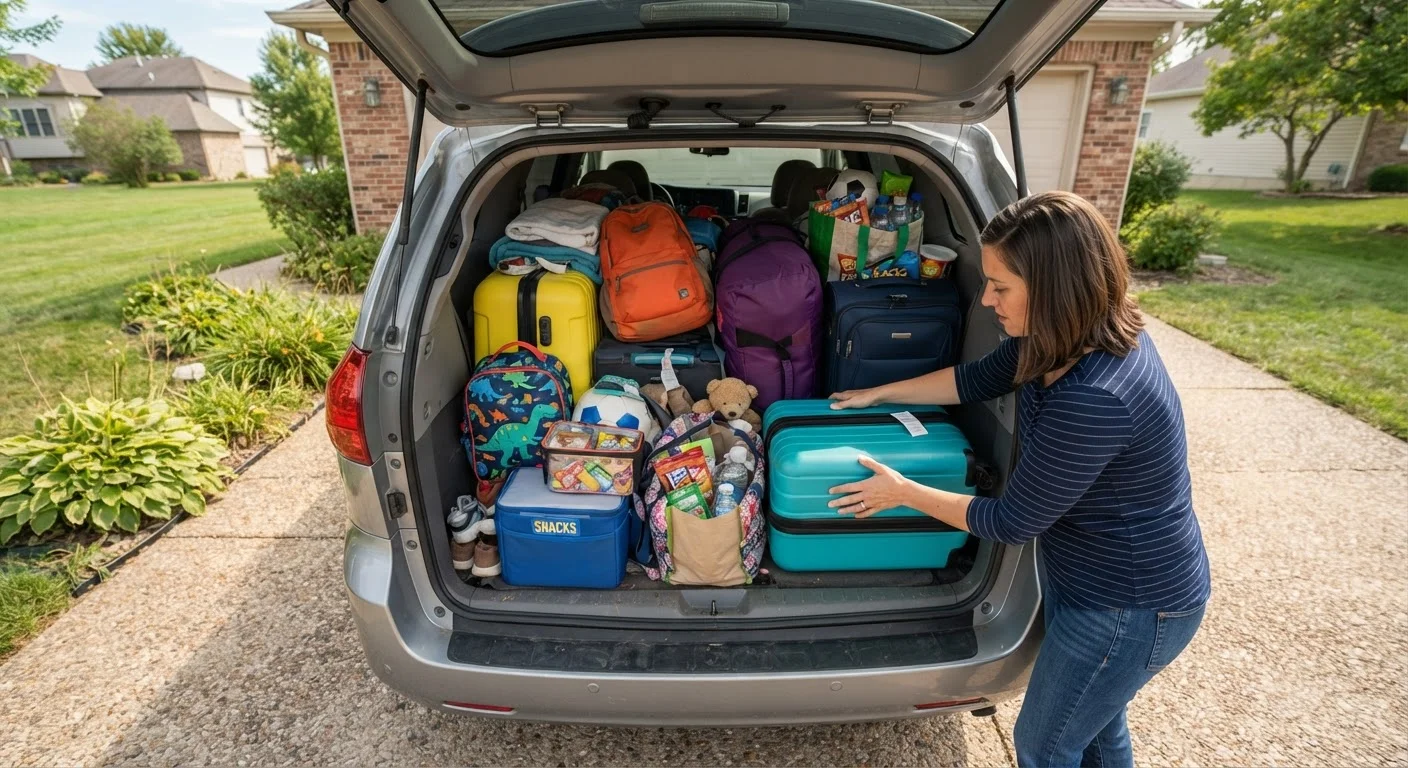
Photo: balancedlivingtools.net editorial
Key Takeaways
- Families consistently overpack clothing, often bringing twice what they actually wear on a road trip.
- A small, targeted first-aid kit prevents the most common on-road health issues without bulk.
- Entertainment and snack planning gaps cause the most in-trip spending and stress for families.
- Checking vehicle supplies before departure is one of the most skipped and costliest oversights.
Why road trip packing goes sideways
Road trips feel forgiving compared to flying: no baggage fees, no security lines, and no weight limits enforced at the curb. That freedom is exactly why families end up hauling far more than they need, while still forgetting the things that matter most. The result is a crammed car, a stressed-out driver, and a gas station run on day one for items that were already sitting at home.
Packing well is mostly about honest planning. Most families skip a pre-trip audit because they assume they remember what worked last time. They often don't. For a fuller look at how small convenience decisions add up across a family trip, see where families quietly overspend.
Packing a full week of clothing for every family member, including backup outfits for unlikely scenarios.
Bringing full-size toiletries, including shampoo, conditioner, and body wash, for a multi-night trip.
Leaving without a functional first-aid kit that matches the trip's actual risks.
Skipping car-specific supplies like a tire gauge, jumper cables or a jump pack, and an emergency contact sheet.
Packing no snacks or only a small bag, then buying food and drinks at convenience stores throughout the trip.
Overpacking children's entertainment with bulky items, then failing to bring chargers and backup power for devices.
The items that eat the most space unnecessarily
Clothing is the single largest source of overpacking on family road trips. Parents tend to pack one outfit per day plus extras for spills, then add backup layers, formal options "just in case," and pajamas for every night. A week-long trip can balloon into three full bags before toiletries are even loaded. A realistic rule: plan for two to three days of clothes and count on laundry access at a hotel or campsite. Most lodging options along major US routes have coin-operated machines or laundry service.
Bulky comfort items are the second culprit. Full-size pillows, oversized stuffed animals, and large board games all consume trunk space that fuel canisters, strollers, or a cooler actually need. Compact travel versions of games and smaller comfort items serve the same purpose without the footprint.
59%
Families who say they overpacked on their last trip
A 2023 survey by OnePoll found that 59 percent of American travelers reported overpacking on their most recent trip, with clothing cited as the top category.
$30-$60
Daily convenience-store food spend without a cooler
Road travel consumer spending data consistently shows families without packed food spend significantly more per day at gas stations and convenience stores compared to those who bring a cooler.
If your trip involves camping, the gear calculus changes, but the principle stays the same. Our camping vs. budget hotels comparison covers what gear is genuinely worth hauling versus what you can rent or skip entirely.
What families consistently forget
The underpacking side of the equation is less obvious but more disruptive. The three categories families skip most often are: a practical first-aid kit, car-specific supplies, and structured snack planning.
A basic first-aid kit for road travel should include adhesive bandages in multiple sizes, an oral pain reliever, an antihistamine, antacids, motion sickness medication if children are prone to it, and any prescriptions the family takes regularly. Most families bring nothing or grab a flimsy drugstore kit that lacks the specific items they need. For a room-by-room guide to what belongs in a well-stocked kit, building a practical family medicine cabinet is worth reading before you pack.
Car supplies are skipped even more often. A tire pressure gauge, a basic jump kit, an ice scraper for northern routes in shoulder seasons, and a printed copy of your roadside assistance number belong in every family vehicle before a long drive. Pre-trip vehicle checks matter too: routine maintenance tasks that save families money outlines the checks that prevent roadside surprises.
Snack planning is where in-trip overspending hits hardest. Families who leave without a cooler and a deliberate snack supply end up paying convenience-store prices multiple times per day. A small cooler with water, fruit, cheese sticks, and simple sandwiches cuts those stops significantly.
Don't pack medications without checking expiration dates
For broader trip planning that connects packing decisions to route and lodging choices, the family road trip budget planning guide has the full framework.
The content provided on our blog site traverses numerous categories, offering readers valuable and practical information. Readers can use the editorial team’s research and data to gain more insights into their topics of interest. However, they are requested not to treat the articles as conclusive. The website team cannot be held responsible for differences in data or inaccuracies found across other platforms. Please also note that the site might also miss out on various schemes and offers available that the readers may find more beneficial than the ones we cover.