
Free and Low-Cost Family Activities at America's Most Visited Cities

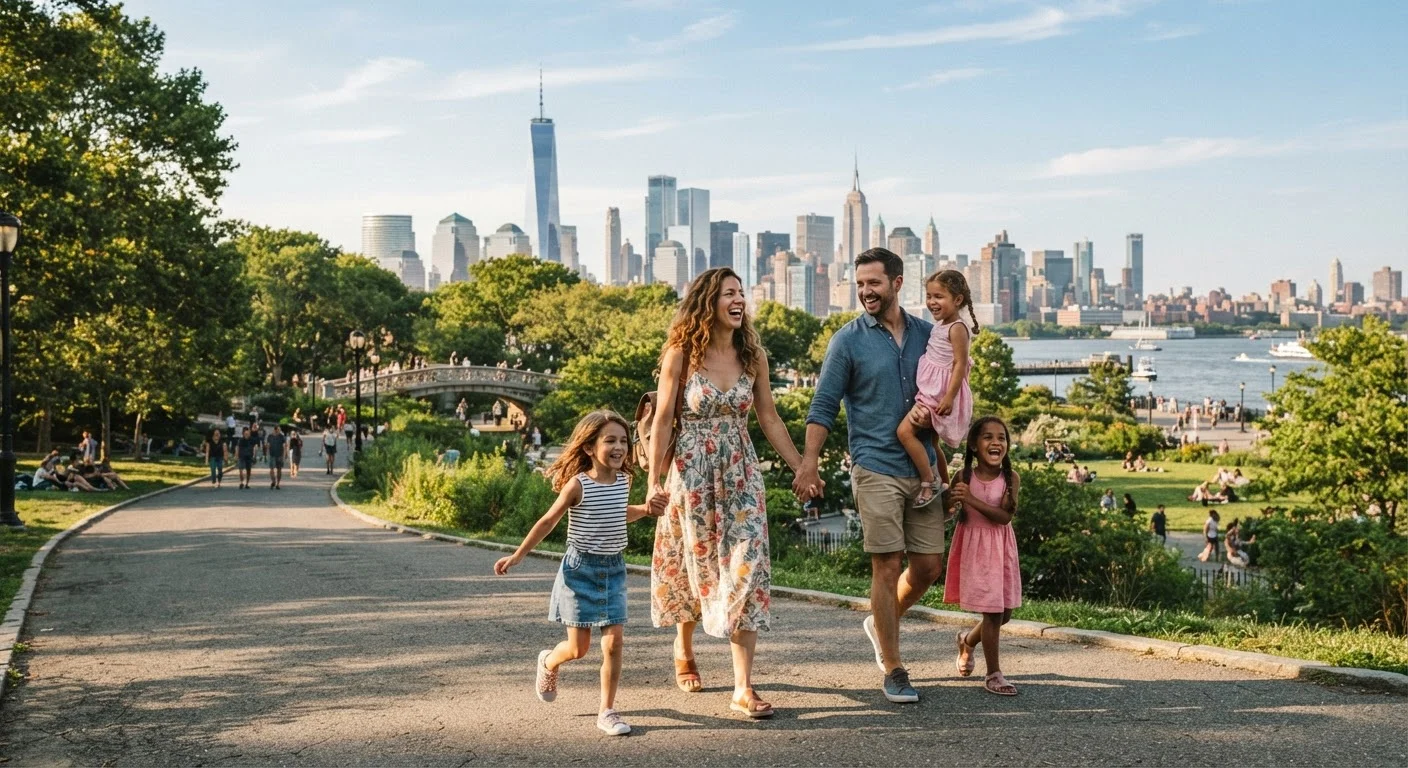
Photo: balancedlivingtools.net editorial
Key Takeaways
- Many of America's most visited cities have free or low-admission museums, parks, and cultural sites.
- Planning around free admission days can cut entertainment costs significantly for families.
- Off-peak visits often mean shorter lines and lower prices without sacrificing the experience.
- National monuments, lakefronts, and public art installations cost nothing to enjoy.
- Library cards, city passes, and local event calendars can unlock additional free programming.
Big city fun without the big city bill
America's most visited cities can feel financially out of reach, but most of them are full of free and low-cost experiences that families overlook while chasing the headline attractions. Public parks, free museum days, waterfront paths, and neighborhood walks are available in virtually every major US city, and they often produce the memories that stick longer than a pricey theme park ticket.
The list below covers six cities where families can build a full day, or several days, around little or no admission costs. Prices and program details shift over time, so treat each entry as a starting point rather than a guaranteed price. And if you're thinking about how to get between these cities affordably, our family road trip planning guide covers the nuts and bolts of budget driving trips.
Washington DC: a city built for free exploration
Washington DC may be the single most budget-friendly major destination in the country for families. The Smithsonian Institution operates 19 museums and galleries across the National Mall, and every one of them is free to enter. That covers everything from dinosaur fossils at the National Museum of Natural History to spacecraft at the National Air and Space Museum.
Beyond the Smithsonian, the National Zoo admission is also free. The Lincoln Memorial, the Vietnam Veterans Memorial, and the National Mall itself are open around the clock at no charge. Pack a lunch and spend a full day moving between monuments without spending a dollar on admission.
Metro rides add up, so consider staying near a Metro station and walking between Mall attractions. Many are within a half-mile of each other.
The Smithsonian's 19 free museums can fill multiple family days without costing a cent.
Chicago: lakefront access and free museum days
Chicago's lakefront is 18 miles of public shoreline, and all of it is free. Families can spend a morning at North Avenue Beach, ride bikes along the Lakefront Trail, or walk through Millennium Park to see the Cloud Gate sculpture (always free).
The city's major museums, including the Field Museum, the Shedd Aquarium, and the Art Institute of Chicago, do charge admission, but each participates in the Chicago Cultural Miles program or offers reduced-cost days for Illinois residents and low-income families. Chicago Public Library cardholders can borrow free museum passes through the Culture Pass program, which is worth checking before you visit.
Navy Pier has free public access to its grounds, outdoor concerts in summer, and seasonal programming that costs nothing. Lincoln Park Zoo is one of the few major urban zoos in the country with no general admission fee.
Lincoln Park Zoo charges no general admission, making it a reliable free stop for families.
New York City: free culture beyond Times Square
New York City has a reputation for being expensive, and it can be. But the city also has an enormous amount of free and low-cost programming that families often miss because they focus on Broadway and tourist-heavy blocks.
The Staten Island Ferry crosses New York Harbor and passes by the Statue of Liberty with no ticket required. Central Park's 843 acres include playgrounds, a free zoo for children under 3, the Great Lawn for picnics, and seasonal outdoor concerts. The High Line, a park built on an elevated rail line, is free to walk year-round.
Many of New York's world-class museums have pay-what-you-wish hours or specific free windows. The Metropolitan Museum of Art, for example, admits children under 12 for free. Bryant Park hosts free outdoor movies in summer and free ice skating in winter (skate rental is a separate cost). Checking the NYC Parks website before your trip turns up free events happening almost every weekend.
The Staten Island Ferry passes the Statue of Liberty for free, no ticket needed.
Denver: outdoor access with no price tag
Denver sits at 5,280 feet above sea level and has easy access to open space that costs nothing. The Denver Botanic Gardens offers reduced-price evenings in summer. Red Rocks Park and Amphitheatre, about 15 miles west of the city, is free to visit outside of concert nights. The natural rock formations and hiking trails there are open daily at no charge.
Downtown Denver has a 16th Street Mall that is free to walk, with a free shuttle running its length. Confluence Park, where Cherry Creek meets the South Platte River, is a popular free spot for families on warm days. The Denver Museum of Nature and Science has a Colorado Residents Free Day on the first Tuesday of each month.
For families building a trip around the outdoors, Denver is a strong base for national park visits to Rocky Mountain National Park, which is close enough for a day trip.
Red Rocks Park is free to hike any day there isn't a concert scheduled.
San Francisco: parks, piers, and neighborhood walks
San Francisco is expensive to sleep in, but much of what makes it interesting costs nothing. Golden Gate Park is 1,017 acres of free public space with playgrounds, the free Bison Paddock, and the free Shakespeare Garden. The park also contains the California Academy of Sciences and the de Young Museum, both of which have free Sunday mornings for San Francisco residents.
The Golden Gate Bridge is free to walk across from the pedestrian path. Crissy Field, along the waterfront, is open free to the public with views of the bridge and Alcatraz. Fisherman's Wharf and the Ferry Building are free to explore, with street performances along the Embarcadero at no cost.
Cable car rides do cost money, but the F Market streetcar runs a historical line and costs the same as a standard Muni fare. Families who plan their lodging carefully and use public transit can keep daily expenses low. Pairing San Francisco with a budget road trip along the California coast stretches the value further.
Walking the Golden Gate Bridge pedestrian path costs nothing and gives unmatched views.
Seattle: public markets and free outdoor spaces
Pike Place Market is free to walk through, and watching the fishmongers, browsing the flower stalls, and finding the original Starbucks location (no obligation to buy anything) is an experience families genuinely enjoy. The market sits above the waterfront, where the Seattle Great Wheel and the aquarium charge admission, but the waterfront walkway itself is free.
Seattle has a strong network of free parks. Discovery Park is the city's largest at 534 acres, with trails, beaches, and a lighthouse. Chittenden Locks (Hiram M. Chittenden Locks) in the Ballard neighborhood lets families watch boats pass through the lock system and salmon migrate through a fish ladder, all at no charge.
The Seattle Center, home to the Space Needle (paid), also includes the International Fountain, the free Chihuly Garden (exterior), and open lawns. The Pacific Science Center offers reduced-admission days, and the Seattle Public Library system offers free museum passes to cardholders. Visiting in the off-season, as discussed in our guide on off-season family travel, can mean fewer crowds at these free spots too.
Chittenden Locks is a free, genuinely fascinating stop where families can watch salmon migrate.
Making the most of free city experiences
Verify hours and free days before you go
A few habits make free and low-cost city travel work better in practice. Downloading a city's parks and recreation app or checking the local library's website before you arrive often reveals programming, passes, and events that aren't well advertised. Many public libraries in major cities loan museum passes or offer free tickets to residents and sometimes even to visitors who sign up for a guest card.
Families who travel during shoulder seasons, September through early November or late February through April, generally find smaller crowds at free outdoor spots and shorter waits at the museums that do charge. If you're curious about what to expect when timing your trip around lower-cost windows, the article on off-season family travel walks through the realistic trade-offs. Free city experiences and free national parks pair well together. National parks close to major cities can add a low-cost day trip to any urban itinerary.
The content provided on our blog site traverses numerous categories, offering readers valuable and practical information. Readers can use the editorial team’s research and data to gain more insights into their topics of interest. However, they are requested not to treat the articles as conclusive. The website team cannot be held responsible for differences in data or inaccuracies found across other platforms. Please also note that the site might also miss out on various schemes and offers available that the readers may find more beneficial than the ones we cover.