
Building a Family Medicine Cabinet That Earns Its Keep

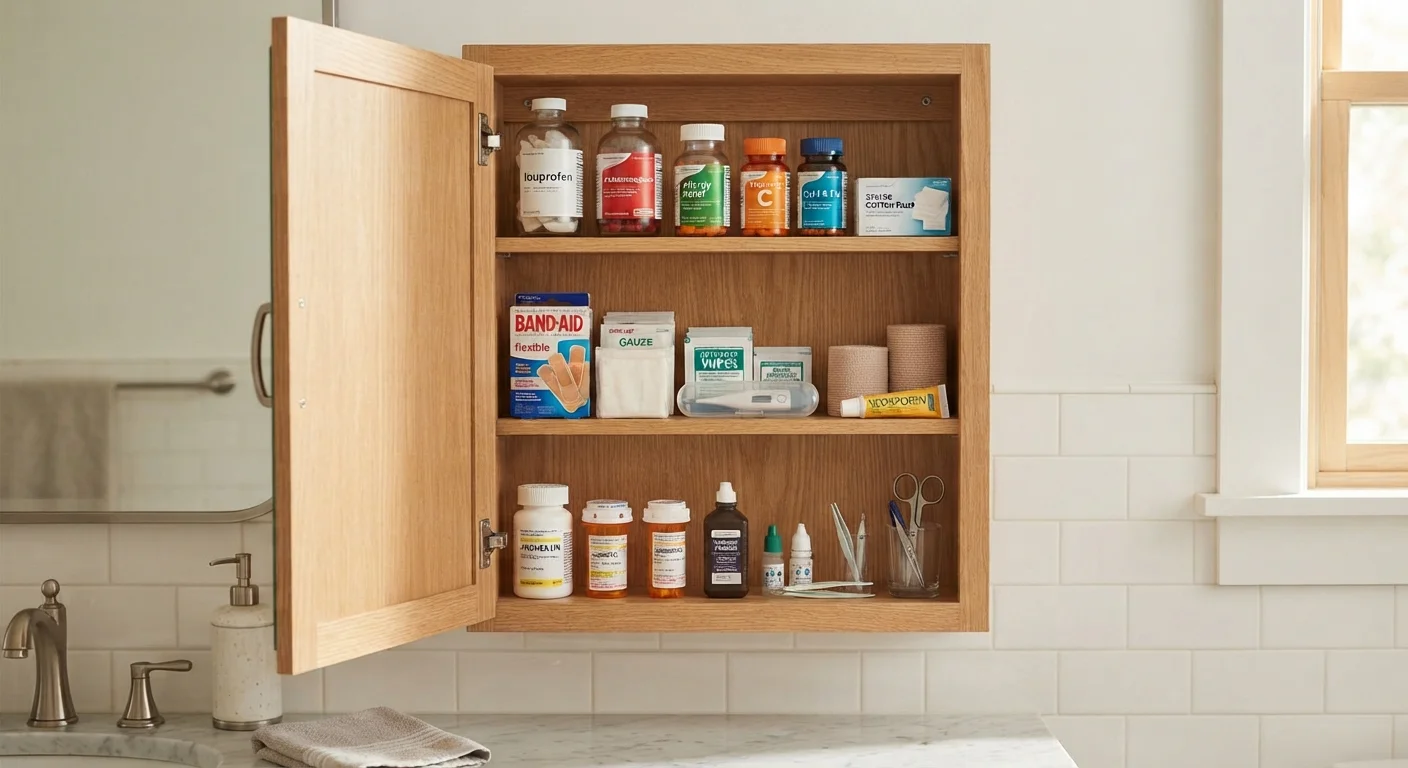
Photo: balancedlivingtools.net editorial
Key Takeaways
- A practical medicine cabinet covers pain relief, wound care, digestive upset, and allergy response without unnecessary extras.
- Generic medications contain the same active ingredients as brand-name versions and cost significantly less.
- Storage location matters: heat and humidity degrade medications faster than most people realize.
- Expiration dates are not suggestions; dispose of expired products through proper drug take-back programs.
- Consult a pharmacist or doctor before stocking items for infants, pregnant individuals, or people with chronic conditions.
Why your medicine cabinet is worth getting right
A disorganized or poorly stocked medicine cabinet costs families in two ways: emergency late-night pharmacy trips at full price, and duplicate purchases of items already buried at the back of a shelf. Getting the cabinet right once reduces both problems.
This checklist covers what to stock, how to store it, and what to skip. It draws on general guidance from the U.S. Food and Drug Administration (FDA) and the American Red Cross on home first aid preparedness. None of the information here replaces advice from your family's healthcare provider, who can tailor recommendations to your household's specific needs.
Choosing generic over brand-name products is one of the clearest ways to cut costs without sacrificing efficacy. The FDA requires generic drugs to contain the same active ingredient, strength, and dosage form as their brand-name equivalents. See our guide to generic vs. brand-name medications for a fuller explanation of what the labels do and do not tell you.
Pain and fever relief
Wound and skin care
Allergy and respiratory
Digestive and cold care
Preparation and organization
What to stock and how to store it
Once you have your items, storage location determines how long they stay effective. The FDA cautions that bathrooms, despite being the traditional spot for medicine cabinets, expose medications to heat and humidity that accelerate breakdown. A bedroom dresser drawer, a linen closet shelf, or a high kitchen cabinet away from the stove are all better options. Keep everything out of reach of children; a locked box or latch is worth adding if young children are in the household.
Bathrooms are a poor storage location
Label each item with the purchase date using a permanent marker. Set a calendar reminder every six months to check expiration dates. Expired medications should not go in the trash or down the drain: the FDA recommends using DEA-authorized drug take-back locations, many of which are free and available at local pharmacies or police stations.
Before adding any new item for a child under two, a pregnant or nursing individual, or anyone managing a chronic condition, check with a healthcare provider. Dosing and safety profiles differ significantly across these groups, and a general household checklist cannot substitute for that conversation.
Pairing a well-stocked cabinet with smart preventive care habits reduces the overall number of urgent situations that require over-the-counter treatment in the first place.
Digital thermometer
Measures body temperature accurately for children and adults; needed before deciding whether to use fever-reducing medication.
Oral rehydration solution packets
Replaces fluids and electrolytes lost during vomiting or diarrhea, especially important for young children.
Blunt-tip scissors and tweezers
Used to cut gauze or tape and to remove splinters or debris from wounds safely.
Permanent marker
Labels each item with a purchase date so you can track expiration at your biannual review.
Lockable storage box or cabinet latch
Prevents young children from accessing medications unsupervised.
Emergency contact card
Stores poison control, pediatrician, and pharmacist numbers alongside allergy and medication lists for any caregiver.
This article is for informational purposes only and is not medical advice. Always consult a qualified healthcare professional for guidance on medications, symptoms, or medical decisions specific to your family.
The content provided on our blog site traverses numerous categories, offering readers valuable and practical information. Readers can use the editorial team’s research and data to gain more insights into their topics of interest. However, they are requested not to treat the articles as conclusive. The website team cannot be held responsible for differences in data or inaccuracies found across other platforms. Please also note that the site might also miss out on various schemes and offers available that the readers may find more beneficial than the ones we cover.