
Repurposing Common Household Items for Garden Use

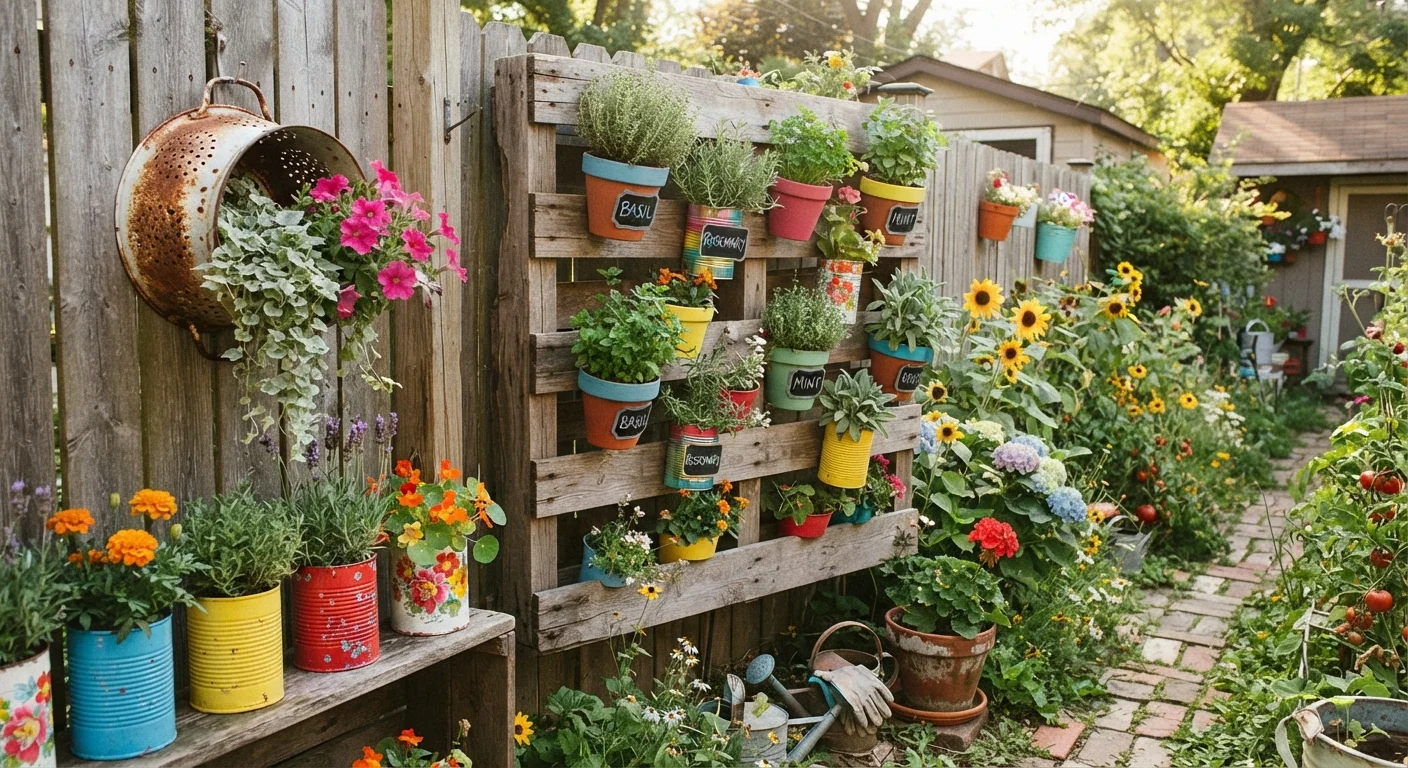
Photo: balancedlivingtools.net editorial
Key Takeaways
- Repurposing household items for the garden cuts costs without sacrificing plant health or productivity.
- Drainage, material safety, and container size all affect how well a repurposed item works as a planter.
- Many common objects work as garden borders, trellises, seed starters, and pest deterrents.
- Checking for chemical residues or treated wood is important before using any repurposed container near edibles.
- Combining repurposed items with good soil and compost practices gives plants the best growing conditions.
Why repurposing for the garden makes practical sense
Buying dedicated garden supplies adds up fast. A few planters, a trellis, border edging, and a set of seed-starting trays can cost more than the plants themselves. Many items already in your home, garage, or recycling bin can perform the same functions at no extra cost.
The idea is not simply to reduce spending. Repurposing also keeps usable materials out of landfills and gives worn or obsolete items a second productive life. For families growing food, the savings matter even more: a backyard vegetable garden already reduces grocery costs, and skipping expensive containers extends that benefit further.
Before using any repurposed item near edible plants, check that it has not held chemicals, pesticides, or fuel. Avoid wood treated with older preservatives, which can leach compounds into soil. When in doubt, use repurposed containers for ornamentals rather than food crops.
Test drainage before planting
The items below cover a range of garden needs, from seed starting to soil retention, so you can match each object to wherever your garden currently needs the most support.
Household items that work in the garden
Colanders and strainers as hanging planters
Metal or plastic colanders already have drainage holes built in, which is one of the more time-consuming steps when converting other containers. A worn colander that no longer holds its shape for kitchen use works well as a hanging planter for herbs, strawberries, or trailing flowers.
Line the inside with a layer of burlap, coconut coir, or a few sheets of newspaper before adding potting mix. This slows soil from washing through the holes while still allowing water to drain freely. Hang with sturdy rope or wire from a porch rafter or fence post.
Built-in drainage holes make colanders one of the most ready-to-use repurposed planters available.
Wooden pallets for vertical growing
A single upright pallet can hold a dozen small plants in its horizontal slots, which suits herbs, lettuce, and shallow-rooted annuals. Stand it against a fence or wall and staple landscape fabric to the back and sides to hold soil in place. Fill each slot with potting mix and plant directly into the openings.
Check that the pallet carries an HT (heat-treated) stamp rather than an MB (methyl bromide) stamp before using it near food plants. Heat-treated pallets are considered safer for garden use. Avoid any pallet that shows stains, fuel residue, or an unclear origin.
An HT-stamped pallet standing against a fence can grow a full herb garden in a few square feet of floor space.
Tin cans and glass jars as seed starters
Rinsed tin cans and wide-mouth glass jars make low-cost seed-starting containers. Punch or drill a few small holes in the bottom of tin cans before filling with seed-starting mix. Glass jars without holes work temporarily for germination on a windowsill, though seedlings should move to a container with drainage once the first true leaves appear.
Label each can with masking tape and a marker so you track what is germinating. This approach works particularly well for larger seeds such as beans, squash, and sunflowers that need only a short indoor period before transplanting outside.
Tin cans with drainage holes drilled in the base perform the same function as commercial seed-starting pots.
Old gutters as shallow planting troughs
A length of plastic or aluminum guttering removed during a home repair can become a mounted planting trough for lettuce, spinach, radishes, and other shallow-rooted crops. Drill holes every six inches along the bottom for drainage, cap both ends with gutter end-caps or packed caulk, and mount horizontally on a fence or wall with pipe brackets.
Because gutters are narrow and relatively light when filled, stacking two or three at different heights on a single fence section is practical. This arrangement uses vertical space efficiently in small yards or on balconies where ground-level planting room is limited.
Mounted gutters convert a fence into a productive growing surface for shallow-rooted vegetables.
Newspaper and cardboard as weed-suppressing mulch
Thick layers of newspaper or plain cardboard laid directly on soil between plants block light from weed seeds without chemicals. Wet the material first so it conforms to the ground and stays in place, then cover it with a layer of wood chip mulch or straw. Over a single growing season the layers break down and add organic matter to the soil.
This method works especially well in new beds where weed pressure is high. For more detail on how this compares to other ground-covering options, see the comparison of mulch, rock, and ground cover for American yards.
Wet cardboard under a layer of mulch suppresses weeds through an entire season without any chemical input.
Plastic bottles as slow-release watering tools
A two-liter plastic bottle with several small holes poked into the cap and the bottom cut off can act as a drip irrigator when inverted and pushed neck-down into the soil beside a plant. Fill the bottle with water and it releases slowly into the root zone over several hours, which suits tomatoes, peppers, and other deep-rooted plants during hot spells.
This works as a practical gap-filler when you cannot water daily. The flow rate depends on hole size: start with two or three small holes and add more if drainage is too slow for your soil type. Rinse the bottle before each refill to prevent algae buildup in the neck.
An inverted plastic bottle with small holes in the cap delivers water directly to roots over several hours.
Bamboo chopsticks and skewers as plant stakes
Disposable bamboo chopsticks and wooden skewers work as stakes for seedlings and small plants that need upright support. A few pressed into the soil around a young tomato or pepper plant and loosely tied with kitchen twine holds stems straight during establishment. They are not strong enough for large or top-heavy plants, but for seedlings and compact annuals they perform well.
Reuse them multiple seasons by letting them dry fully between uses. When they eventually split or soften, they can go into the compost pile rather than the trash.
Chopsticks and skewers offer enough support for seedlings and compact plants without any cost beyond what you already have.
Getting more from what you already use
Repurposed containers work best when paired with good growing fundamentals. Soil quality, watering consistency, and appropriate sunlight matter far more than what a container looks like. If you are starting plants from seed inside first, the guide on indoor seed starting covers which crops actually benefit from that extra step.
Finished compost from kitchen scraps improves drainage and nutrition in any container, including repurposed ones. The home composting guide walks through setting up a low-cost system that feeds whatever you are growing. Combining repurposed containers with homemade compost means your garden inputs cost very little while plant health stays solid.
The content provided on our blog site traverses numerous categories, offering readers valuable and practical information. Readers can use the editorial team’s research and data to gain more insights into their topics of interest. However, they are requested not to treat the articles as conclusive. The website team cannot be held responsible for differences in data or inaccuracies found across other platforms. Please also note that the site might also miss out on various schemes and offers available that the readers may find more beneficial than the ones we cover.