
Common Myths About Eating Healthy on a Limited Budget

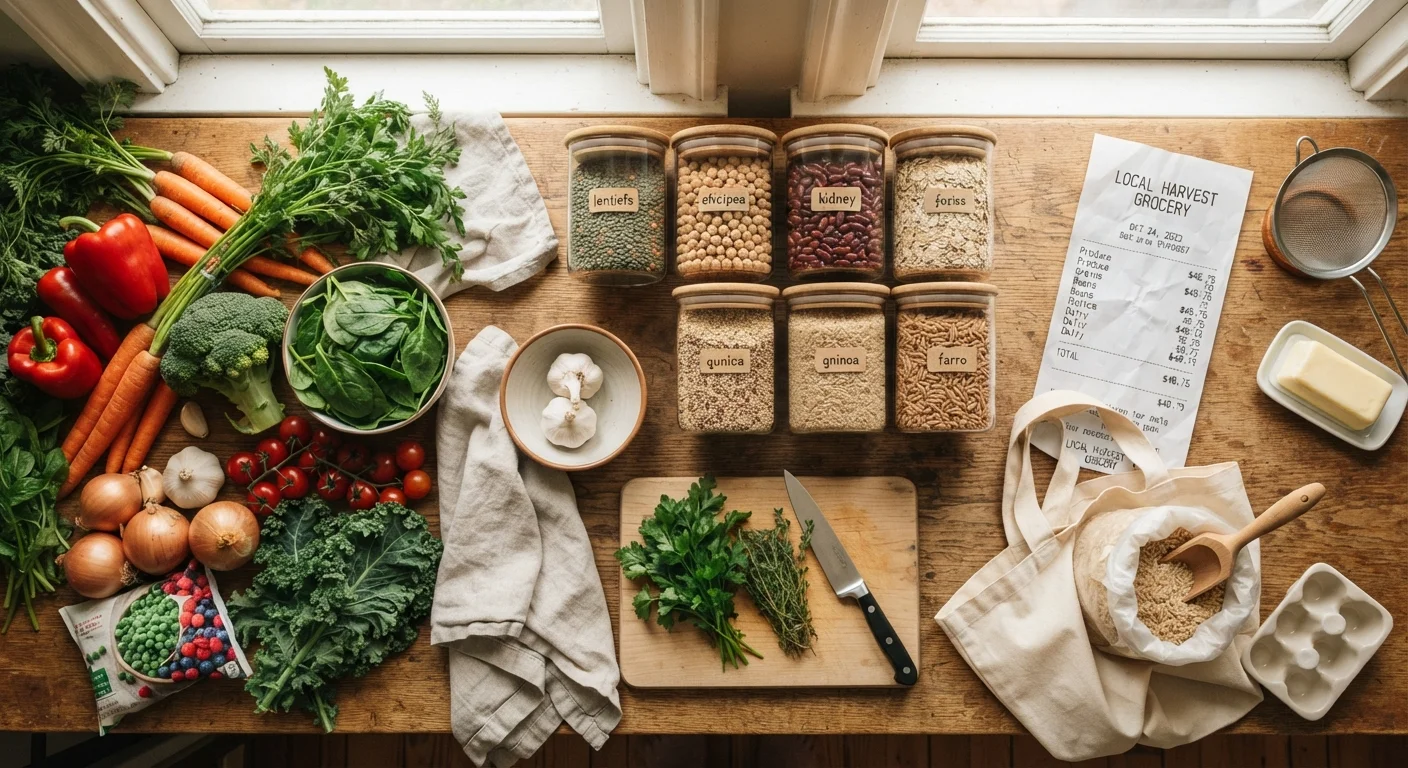
Photo: balancedlivingtools.net editorial
Key Takeaways
- Frozen and canned vegetables are nutritionally comparable to fresh produce and cost less per serving.
- Dried legumes, whole grains, and eggs are among the most cost-effective sources of protein and fiber available.
- Store-brand products meet the same federal food safety and labeling standards as name-brand alternatives.
- Meal planning and batch cooking can reduce both food waste and weekly grocery spending meaningfully.
- Budget constraints do not make healthy eating impossible, but they do require intentional purchasing decisions.
Why these myths persist
The idea that nutritious food is reserved for people with large grocery budgets is widespread, and it shapes real decisions about what families put in their carts. Some of this belief comes from marketing, which promotes premium packaging around ordinary ingredients. Some comes from comparing fast food prices to restaurant-quality prepared meals rather than to home-cooked equivalents. The result is a set of assumptions that discourage families from trying approaches that could genuinely work for them.
The myth-and-fact pairs below draw on publicly available nutrition research, USDA food cost data, and guidance from the CDC and the Academy of Nutrition and Dietetics. None of the information here substitutes for personalized advice from a registered dietitian, particularly for households managing chronic conditions or special dietary needs.
Myth
Eating healthy costs significantly more than eating an unhealthy diet.
Fact
When measured by cost per serving or cost per gram of protein, many nutritious whole foods are among the least expensive items in the grocery store.
USDA Economic Research Service analyses have found that staples like dried beans, lentils, oats, cabbage, carrots, and canned fish cost less per edible portion than most processed snack foods or fast food items. The comparison shifts when healthy eating is equated with organic produce or specialty health products, which are not nutritional requirements. A family that builds meals around legumes, whole grains, and seasonal or frozen vegetables can meet federal dietary guidelines at a modest per-person daily food cost. The grocery habits that build savings over time article outlines how consistent purchasing choices compound into real annual differences.
Myth
Frozen vegetables are less nutritious than fresh ones.
Fact
Frozen vegetables are typically harvested at peak ripeness and flash-frozen within hours, which preserves most of their vitamin and mineral content.
Research published in nutrition journals has shown that certain nutrients, including vitamin C and folate, are sometimes better retained in frozen produce than in fresh produce that has traveled long distances and sat in storage. Fresh vegetables do not automatically carry a nutritional advantage, and frozen options are often substantially cheaper per serving. The practical implication is that frozen spinach, broccoli, peas, and corn are sound choices for families watching their grocery budget, not a nutritional compromise.
Myth
Store-brand or generic food products are lower quality than name brands.
Fact
Store-brand products are manufactured under the same federal food safety regulations and often come from the same production facilities as name-brand products.
The FDA and USDA apply identical labeling and safety standards regardless of brand. Consumer Reports testing over multiple years has consistently found that store-brand canned goods, frozen vegetables, dried pasta, and other staples perform comparably to their name-brand counterparts on nutrition and quality measures. Price differences between equivalent products represent marketing and packaging costs, not ingredient differences. Substituting store-brand versions of regularly purchased items is one of the simplest ways to reduce a grocery bill without changing what a family actually eats.
Myth
You need expensive protein sources like salmon or lean cuts of beef to eat well.
Fact
Eggs, canned sardines, dried beans, lentils, low-fat plain yogurt, and canned tuna all provide complete or high-quality protein at a fraction of the cost of premium cuts.
The Dietary Guidelines for Americans recognize a wide range of protein foods, including legumes, eggs, nuts, seeds, and seafood, as nutritionally adequate sources. Dried lentils cost roughly a few cents per cooked serving and provide both protein and dietary fiber. Canned fish such as sardines and tuna are among the most affordable sources of omega-3 fatty acids. A family does not need to anchor its diet around expensive animal proteins to meet recommended protein intake across age groups.
Myth
Organic food is necessary for a healthy diet.
Fact
Organic certification addresses farming practices, not nutritional content. Conventional produce meets established food safety standards and carries comparable nutrient profiles.
The CDC and major nutrition research bodies have not found consistent evidence that organic produce delivers measurable health advantages over conventional produce at the population level. The USDA's National Organic Program defines organic as a production method, not a nutrition category. Families with limited budgets who cannot routinely afford organic can prioritize washing produce thoroughly and varying their fruit and vegetable choices across the week. The additional cost of organic is optional, not obligatory, for a nutritious diet.
Myth
Meal planning only saves time, not money.
Fact
Households that plan meals before shopping consistently buy closer to what they use, which reduces food waste and the impulse purchases that inflate grocery totals.
The USDA estimates that American households waste a substantial portion of the food they purchase, and unplanned shopping trips are a recognized contributor to that waste. Writing a specific list tied to planned meals, then buying only what is on that list, removes the main mechanism by which grocery budgets expand without adding nutritional value. Batch cooking from a planned list also reduces the likelihood of turning to higher-cost convenience meals on busy weeknights. For a structured approach, see the frugal living guide for context on how intentional spending differs from simple deprivation.
Practical steps once the myths are cleared away
Correcting a misconception only helps if it leads to a different action. A few concrete habits make affordable healthy eating more consistent over time.
Building meals around a short list of low-cost, high-nutrient staples, such as dried lentils, canned tomatoes, oats, and eggs, reduces the chance that a tight week forces a poor nutrition outcome. The weekly meal planning approach described in our family-focused guide shows how to structure purchases so waste stays low and meals stay varied.
Comparing unit prices rather than package prices is one of the most reliable ways to identify genuine value at the grocery store. Store-brand items are worth including in that comparison. For a broader look at where grocery and convenience spending tends to drift upward without notice, the article on where families quietly overspend covers patterns that apply directly to food budgets.
For families with outdoor space, growing even a small amount of produce can offset costs on high-value items like herbs and salad greens. The guide to cutting your grocery bill with a backyard garden covers which crops return the most value per square foot.
This article is for general informational purposes only and is not medical or dietary advice. Consult a qualified healthcare professional or registered dietitian for guidance specific to your health situation.
The content provided on our blog site traverses numerous categories, offering readers valuable and practical information. Readers can use the editorial team’s research and data to gain more insights into their topics of interest. However, they are requested not to treat the articles as conclusive. The website team cannot be held responsible for differences in data or inaccuracies found across other platforms. Please also note that the site might also miss out on various schemes and offers available that the readers may find more beneficial than the ones we cover.