
Meal Planning From Scratch: A Family-Friendly System That Actually Sticks

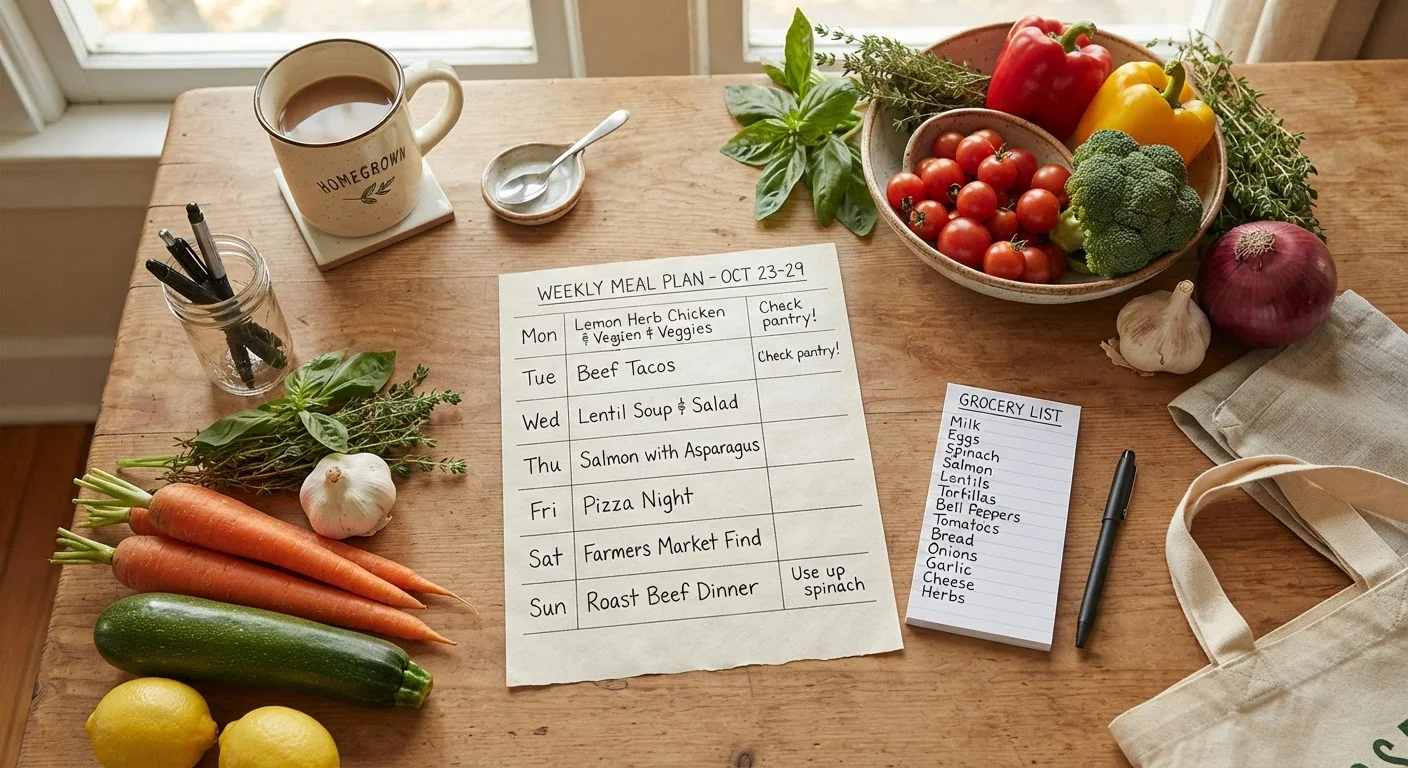
Photo: balancedlivingtools.net editorial
Key Takeaways
- A short weekly planning session is enough to cut impulse spending and reduce food waste significantly.
- Rotating a core set of 10 to 15 familiar recipes makes planning faster and picky eaters more manageable.
- Building your grocery list from the plan, rather than from memory, is the single habit that drives consistent savings.
- Intentional use of leftovers can stretch a weekly food budget further without extra cooking time.
- Even a flexible, imperfect plan beats having no plan when it comes to weeknight stress and overspending.
Why most meal planning attempts fail
Many families try meal planning at least once, usually after a particularly stressful week of last-minute takeout and wasted produce. The plan looks great on Sunday. By Wednesday, it has collapsed. This happens for a predictable set of reasons, and none of them mean meal planning doesn't work.
The most common problem is overambition. A plan packed with elaborate new recipes, strict portion counts, and zero flexibility is hard to sustain even for motivated adults. Add school schedules, late work nights, and a child who suddenly hates the thing they loved last month, and an overcomplicated system falls apart fast.
The second issue is treating meal planning as a cooking project rather than a logistics habit. Planning what your family eats is closer to scheduling than it is to baking bread. It doesn't require culinary skill. It requires a weekly routine and a short list.
Simplify before you quit
If previous attempts haven't stuck, the fix is almost always simplification, not more discipline. A plan built around meals your family already eats is much more durable than one built around meals you hope they'll like.
Building your foundation: the weekly planning session
Set aside 20 to 30 minutes once a week, ideally on the same day each time. Saturday morning or Sunday afternoon works for most families because it falls before the main grocery run. Consistency with timing matters more than which day you choose.
Start by listing your family's reliable meals: the dinners that everyone eats without complaint. Aim for 10 to 15 of these. This becomes your rotation. You'll pull from it every week rather than searching for new recipes, which is how planning stays fast.
During your session, check what's already in the fridge and pantry before writing anything down. Ingredients that need to be used soon should anchor that week's plan. This one habit cuts food waste more than any other single change.
Assign meals to specific nights based on your schedule. A busy Tuesday calls for a 20-minute pasta, not a slow-braised dish. A free Saturday might be the right slot for something that takes more time. Matching meals to your actual week, rather than an ideal week, is what keeps the plan usable.
Meal rotation
A set of familiar meals your family reliably eats, cycled through week after week. Having a rotation removes the need to brainstorm new meals each time you plan.
Anchor ingredient
A perishable item already in your fridge or pantry that needs to be used soon. Building meals around anchor ingredients reduces food waste and shapes the week's plan practically.
Pantry staples
Non-perishable items kept on hand consistently, such as canned beans, pasta, rice, or broth. These fill gaps in the plan without requiring a special grocery trip.
Leftover night
A deliberately scheduled dinner where the household eats food cooked in a previous night's meal. Planning for it prevents leftovers from being forgotten and going to waste.
Per-serving cost
The cost of a meal divided by the number of people eating it. Comparing per-serving costs across different meals is a practical way to evaluate where the food budget is going.
Making your grocery list work harder
Once you have your week's meals written down, build the grocery list directly from those meals. Check each recipe against what you already have and write down only what's missing. This sounds obvious, but most families shop from memory and habit, which leads to duplicate purchases and forgotten items equally.
Group your list by store section: produce, proteins, pantry, dairy, frozen. This reduces backtracking and limits the browsing time that leads to impulse buys. A focused list also makes it easier to hand off the shopping to a partner or older kid without things going sideways.
For more on the habits that compound into real annual savings, see smart grocery habits that add up over a year. And if you want to take the produce question further, growing a backyard vegetable garden can reduce how often you buy certain items at all.
Reducing waste and keeping leftovers appealing
Food waste is one of the easiest budget leaks to fix without changing what your family eats. The USDA has estimated that American households throw away a significant share of the food they buy. Meal planning addresses this directly by connecting purchases to specific uses before anything enters the cart.
Build one night per week into your plan as a leftover night. Frame it that way to your household rather than presenting it as an afterthought. Leftover taco meat becomes nachos. Roast chicken becomes a quick fried rice or a soup. The cooking is already done; it just needs a little reshaping.
For produce that won't last the week, cook it earlier in the rotation and leave longer-lasting vegetables and proteins for Thursday and Friday. Frozen vegetables are a practical bridge here. Common myths about eating healthy on a budget covers why frozen produce is often just as nutritious as fresh, which matters when you're planning several days ahead.
Vegetable scraps, citrus peels, and similar odds and ends don't have to go in the trash either. If your household generates a lot of food prep waste, home composting from kitchen scraps is a low-effort way to close that loop.
Adapting the system as your family changes
A meal planning system that worked for a family of four with toddlers will need adjusting when those kids are teenagers with sports schedules and strong opinions about dinner. The structure stays the same; the recipe rotation and timing flexibility shift.
Bring older kids into the planning session. Letting a child pick one dinner per week dramatically reduces the complaints about what's on the table. It also teaches a practical life skill with no extra effort on your part.
When schedules are particularly hectic, shrink the plan rather than abandon it. Three planned dinners, two leftover nights, and two flexible nights is still a plan, and it still means fewer unplanned food decisions and less money spent on impulse. An imperfect plan beats no plan on a stressed Wednesday evening.
Budget pressures shift too. If the food budget tightens, your rotation already gives you a list of meals to cost-check. Swapping one protein for a cheaper cut, or leaning more heavily on beans and eggs, is easier when you have a clear picture of the week rather than deciding night by night. The evidence around nutritious eating on a limited budget can help you make those swaps with confidence.
Frequently Asked Questions
The content provided on our blog site traverses numerous categories, offering readers valuable and practical information. Readers can use the editorial team’s research and data to gain more insights into their topics of interest. However, they are requested not to treat the articles as conclusive. The website team cannot be held responsible for differences in data or inaccuracies found across other platforms. Please also note that the site might also miss out on various schemes and offers available that the readers may find more beneficial than the ones we cover.