
Seed Starting Indoors: What Works and What Wastes Time

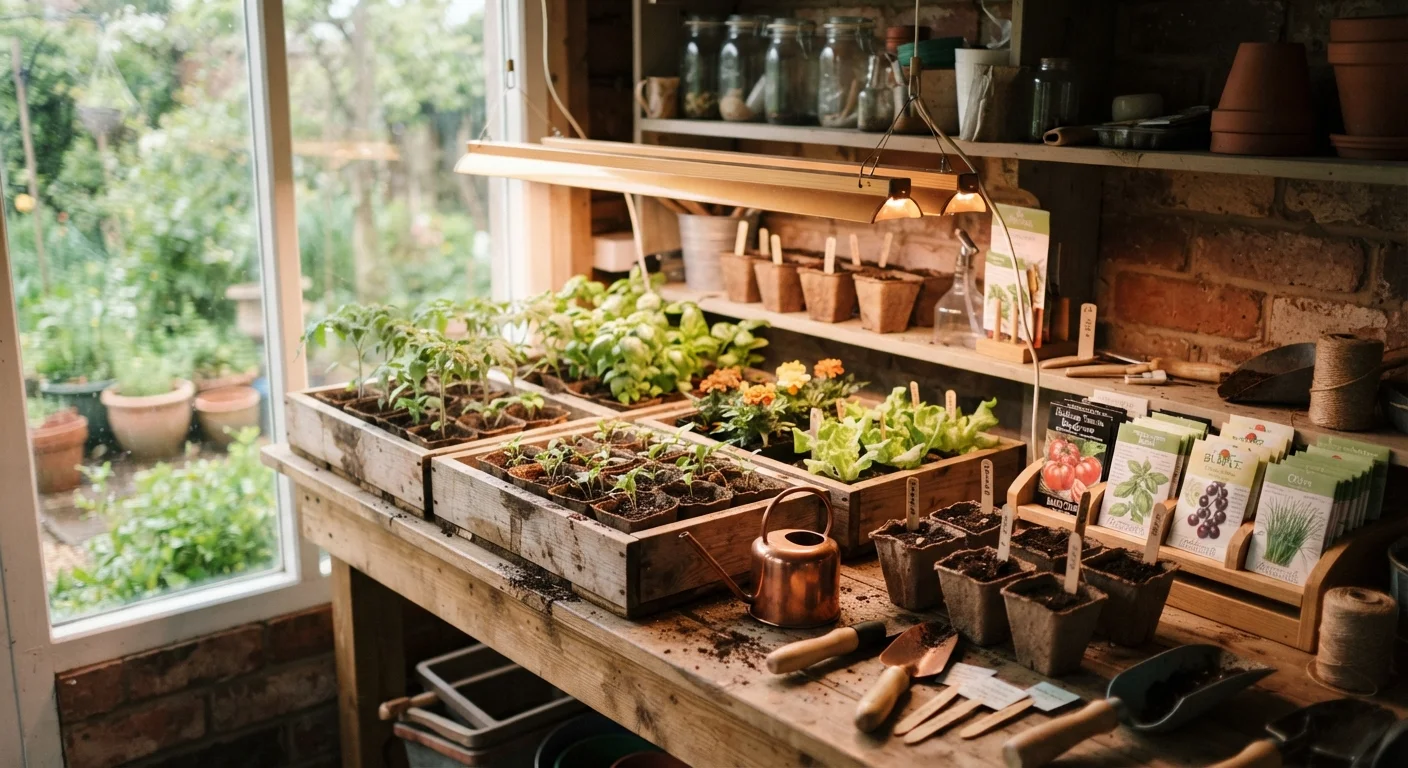
Photo: balancedlivingtools.net editorial
Key Takeaways
- Slow-growing crops like tomatoes and peppers gain the most from indoor starts.
- Many root vegetables and fast-growing crops do better sown directly in the ground.
- Basic equipment (trays, grow lights, heat mats) costs money upfront but can pay back over multiple seasons.
- Timing relative to your last frost date determines whether indoor starting is worthwhile.
- Hardening off seedlings before transplanting is a required step, not an optional one.
Extended growing season for slow-maturing crops
Tomatoes, peppers, and eggplant need more frost-free days than most U.S. zones provide if direct sown. Indoor starts give these crops the time they need.
Lower per-plant cost than nursery transplants
A seed packet typically costs $2 to $4 and contains 20 to 50 seeds. Nursery transplants for the same crop routinely cost $3 to $6 each.
Access to a wider range of varieties
Retail transplant selection is limited to what sells quickly in a local area. Seed catalogs carry far more cultivars, including heirloom and disease-resistant options.
Reusable equipment spreads cost over many seasons
Trays, heat mats, and grow lights bought once can serve the garden for years, reducing the effective annual cost significantly.
Greater control over seedling health from day one
You choose the potting mix, watering frequency, and light exposure, which reduces the chance of introducing pests or disease present in purchased transplants.
Upfront equipment cost is real
A functional grow-light setup, heat mat, and quality seed-starting mix can cost $60 to $150 or more to assemble. That outlay takes multiple seasons to recoup.
Seedlings require consistent daily attention
Watering, adjusting lights, and monitoring temperature cannot be skipped for several days at a stretch. This is a genuine time commitment over 6 to 10 weeks.
Hardening off is non-negotiable and time-consuming
Moving seedlings gradually from indoor to outdoor conditions takes 7 to 10 days and requires moving trays in and out or managing a cold frame. Skipping it causes transplant stress.
Leggy seedlings are a common failure mode
Insufficient light causes seedlings to stretch toward the source, producing weak stems that perform poorly after transplanting. Natural window light is usually not enough without supplemental growing lights.
Not suitable for all vegetables
Root crops and many direct-sow vegetables produce worse results when transplanted. Starting these indoors wastes seeds, supplies, and time without any yield benefit.
Damping off can kill entire trays
Damping off is a fungal condition that kills seedlings at the soil line, often caused by overwatering or poor air circulation. It can wipe out a full tray of seedlings in a day or two.
Why indoor seed starting is worth understanding
Indoor seed starting means sowing seeds in containers inside your home or a protected space weeks before your local last frost date, then transplanting the young plants outdoors once conditions allow. For families trying to grow more of their own food on a modest budget, it can lower the per-plant cost compared to buying transplants from a garden center. A single seed packet often costs less than one transplant, and a packet typically holds dozens of seeds.
The practice is not universally useful, though. Some plants handle transplanting poorly, and others simply grow so fast that starting them indoors provides no real advantage. Getting clear on which crops fall into which category saves both money and frustration.
Repurposing household containers as seed-starting vessels is one way to lower the startup cost further, since yogurt cups and egg cartons can substitute for purchased seed trays in the early weeks.
The genuine advantages
Extended growing season for slow-maturing crops
Tomatoes, peppers, and eggplant need more frost-free days than most U.S. zones provide if direct sown. Indoor starts give these crops the time they need.
Lower per-plant cost than nursery transplants
A seed packet typically costs $2 to $4 and contains 20 to 50 seeds. Nursery transplants for the same crop routinely cost $3 to $6 each.
Access to a wider range of varieties
Retail transplant selection is limited to what sells quickly in a local area. Seed catalogs carry far more cultivars, including heirloom and disease-resistant options.
Reusable equipment spreads cost over many seasons
Trays, heat mats, and grow lights bought once can serve the garden for years, reducing the effective annual cost significantly.
Greater control over seedling health from day one
You choose the potting mix, watering frequency, and light exposure, which reduces the chance of introducing pests or disease present in purchased transplants.
Long-season crops are the clearest case for indoor starting. Tomatoes, peppers, and eggplant need 60 to 90 days or more to reach harvest, and in most U.S. climate zones that timeline exceeds the frost-free window if you wait to direct sow. Starting these indoors 6 to 8 weeks before your last frost date gives them a head start that is otherwise impossible.
Starting seeds indoors also lets you grow varieties unavailable as transplants locally. Seed catalogs carry hundreds of cultivars that never appear on retail shelves, so indoor starting expands your options considerably.
6-8 weeks
Typical indoor lead time for tomatoes and peppers
Most cooperative extension guidelines recommend starting these crops 6 to 8 weeks before the average last frost date for the grower's zone.
50-70 days
Days to harvest for fast-maturing direct-sow crops
Beans, cucumbers, and summer squash reach harvestable size quickly enough that indoor starting provides little practical advantage in most growing zones.
7-10 days
Minimum hardening-off period before transplanting
Cooperative extension programs broadly recommend at least one week of gradual outdoor exposure before moving indoor seedlings to their permanent garden location.
The real disadvantages
Upfront equipment cost is real
A functional grow-light setup, heat mat, and quality seed-starting mix can cost $60 to $150 or more to assemble. That outlay takes multiple seasons to recoup.
Seedlings require consistent daily attention
Watering, adjusting lights, and monitoring temperature cannot be skipped for several days at a stretch. This is a genuine time commitment over 6 to 10 weeks.
Hardening off is non-negotiable and time-consuming
Moving seedlings gradually from indoor to outdoor conditions takes 7 to 10 days and requires moving trays in and out or managing a cold frame. Skipping it causes transplant stress.
Leggy seedlings are a common failure mode
Insufficient light causes seedlings to stretch toward the source, producing weak stems that perform poorly after transplanting. Natural window light is usually not enough without supplemental growing lights.
Not suitable for all vegetables
Root crops and many direct-sow vegetables produce worse results when transplanted. Starting these indoors wastes seeds, supplies, and time without any yield benefit.
Damping off can kill entire trays
Damping off is a fungal condition that kills seedlings at the soil line, often caused by overwatering or poor air circulation. It can wipe out a full tray of seedlings in a day or two.
The most common mistake beginners make is skipping or rushing the hardening-off process. Seedlings grown indoors under controlled conditions need 7 to 10 days of gradual outdoor exposure before full transplanting. Skipping this step frequently causes wilting or stunted growth, negating the head start entirely.
Equipment costs also add up. A basic grow-light setup, heat mat, and quality potting mix represent a real upfront investment. If you start only a small number of plants, that cost per seedling can exceed what you would pay for nursery transplants in the first season.
What to skip and sow directly
Several common vegetables actively perform worse when started indoors. Carrots, beets, radishes, parsnips, and other root crops develop taproots that are easily damaged during transplanting, and that damage directly reduces yield. Direct sowing these in prepared beds is the standard practice for good reason.
Fast-maturing crops are another category where indoor starting provides little benefit. Beans, peas, cucumbers, and squash germinate quickly in warm soil and reach harvestable size within 50 to 70 days. Starting them indoors 4 weeks early offers only a marginal advantage and increases the chance of transplant shock or root binding if the seedlings stay in trays too long.
Corn is also poorly suited to transplanting because its root system is sensitive to disturbance. Direct sowing in blocks gives far more consistent results.
A note on herbs
Making indoor starting affordable over time
The equipment investment becomes more reasonable when you amortize it across several seasons. Quality trays and grow lights can last 5 to 10 years with basic care. Saving seed from open-pollinated varieties further reduces annual costs, since you do not repurchase packets every spring.
Soil mix matters more than most beginners expect. Garden soil compacts in containers and can carry pathogens. A dedicated seed-starting mix with fine texture and good drainage gives seedlings a much better start, and a small bag goes a long way when you reuse containers.
Good compost, whether purchased or homemade, can be blended into transplant holes to smooth the transition from indoor mix to garden soil. Making compost from kitchen scraps is a low-cost way to build that supply at home.
Tracking what you spend and what you harvest over two or three seasons gives you an honest picture of whether indoor starting saves money in your specific situation. The same time-versus-cost thinking that applies to home improvement projects applies here: the method that looks economical on paper may not be once your labor hours are counted.
The content provided on our blog site traverses numerous categories, offering readers valuable and practical information. Readers can use the editorial team’s research and data to gain more insights into their topics of interest. However, they are requested not to treat the articles as conclusive. The website team cannot be held responsible for differences in data or inaccuracies found across other platforms. Please also note that the site might also miss out on various schemes and offers available that the readers may find more beneficial than the ones we cover.