
What Families Get Wrong When Trading In a Vehicle

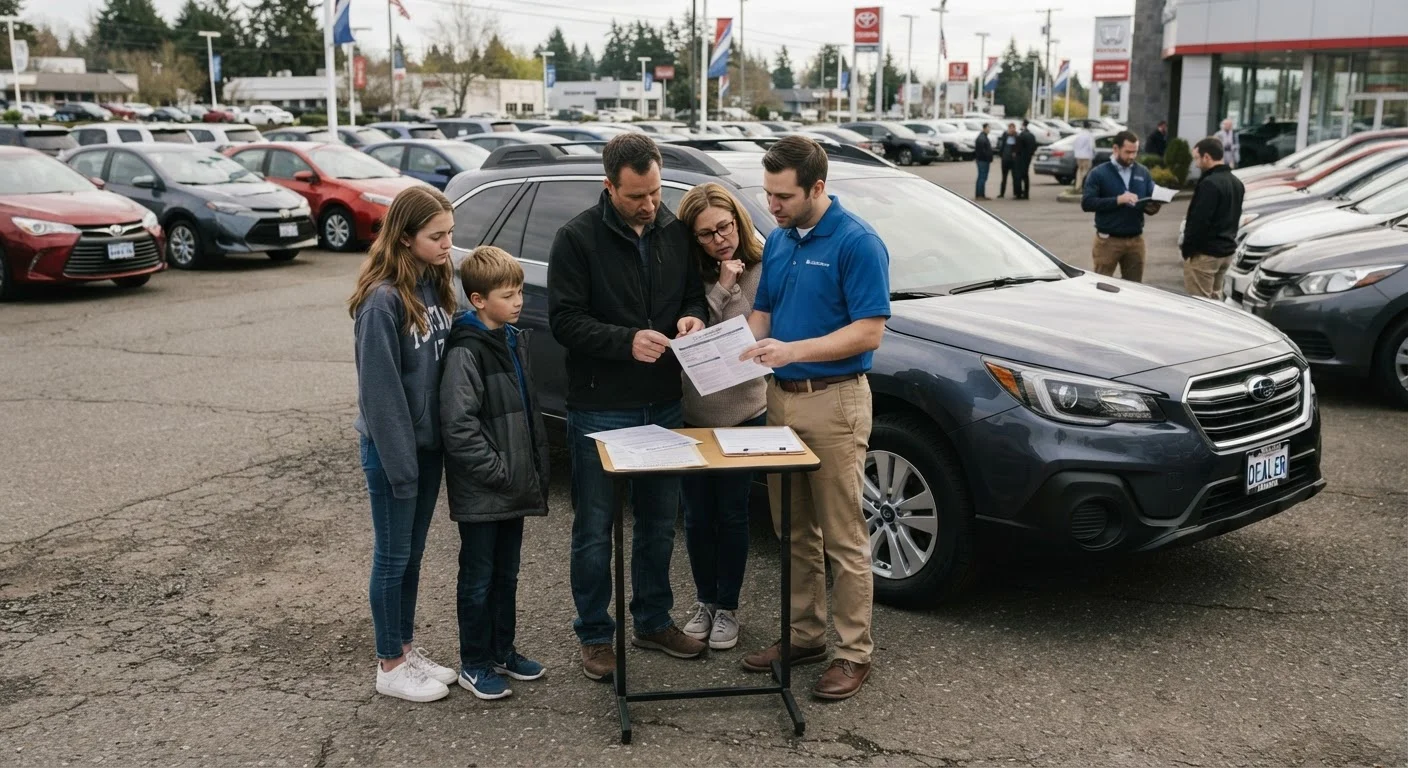
Photo: balancedlivingtools.net editorial
Key Takeaways
- Getting your own appraisal before visiting a dealer gives you a concrete number to negotiate from.
- Bundling the trade-in with the new purchase price in one negotiation typically reduces your payout.
- Outstanding loan balances, timing, and vehicle condition all affect how much a dealer will offer.
- Dealers are not the only trade-in option; private sales and direct car-buying services often pay more.
Why trade-ins go wrong for families
Trading in a vehicle feels like the easy button: hand over the keys, get a credit toward the next car, and skip the hassle of a private sale. That convenience has a price, and families who walk in unprepared often leave with significantly less than their vehicle is worth.
The process looks simple on the surface, but it involves at least two separate financial transactions happening at the same time. Dealers are skilled at managing both sides of that conversation in their favor. Families who understand the common missteps can hold their ground.
Understanding the full cost of ownership alongside a trade-in decision matters too. See why annual car costs run higher than most families expect before committing to a replacement vehicle.
The most common trade-in mistakes
Skipping independent research on the vehicle's market value before visiting a dealer.
Negotiating the trade-in and the new vehicle purchase as a single bundled deal.
Trading in a vehicle with unresolved mechanical issues without factoring that into expectations.
Ignoring negative equity on the existing loan when planning the trade-in.
Treating the dealership as the only trade-in option.
Trading in at the wrong time in the vehicle's depreciation or market cycle.
After reviewing the mistakes above, consider how your next vehicle choice fits your overall budget. A side-by-side look at new versus used car finances can sharpen that decision once you know what your trade-in will actually yield.
Getting your vehicle ready and your number set
Before any dealer conversation, pull trade-in estimates from at least two independent sources. Several established vehicle-valuation services publish market ranges based on mileage, trim, and condition. Write down the range you find, not just the high end.
Clean the vehicle thoroughly inside and out. Fix minor issues, such as burned-out bulbs or missing floor mats, that cost little but affect a dealer's visual impression. A detailed service record strengthens your position because it documents care rather than requiring the appraiser to assume the worst.
If you still owe money on the vehicle, calculate the exact payoff amount from your lender before you go. Equity (what the car is worth minus what you owe) is the number that matters. Negative equity, where you owe more than the car is worth, does not disappear in a trade-in; it rolls into your next loan unless you pay it separately.
Watch out for the monthly payment trap
When you arrive, present the trade-in as a separate conversation from the new vehicle purchase. Agree on the trade-in value first, get it in writing, and then move to purchase price or monthly payment terms. This prevents the dealer from adjusting one number to offset the other.
If the dealer's offer falls short of your research, you have options. Direct car-buying services, auction platforms, and private listings often return more money, though they require more time. Review what to check before buying any used family car so the purchase side of the transaction is as informed as the trade-in side.
For families watching every line item, strategies for lowering every major ownership cost complement the savings you can gain from a well-executed trade-in.
The content provided on our blog site traverses numerous categories, offering readers valuable and practical information. Readers can use the editorial team’s research and data to gain more insights into their topics of interest. However, they are requested not to treat the articles as conclusive. The website team cannot be held responsible for differences in data or inaccuracies found across other platforms. Please also note that the site might also miss out on various schemes and offers available that the readers may find more beneficial than the ones we cover.