
Generic vs. Brand-Name Medications: What the Labels Do Not Tell You

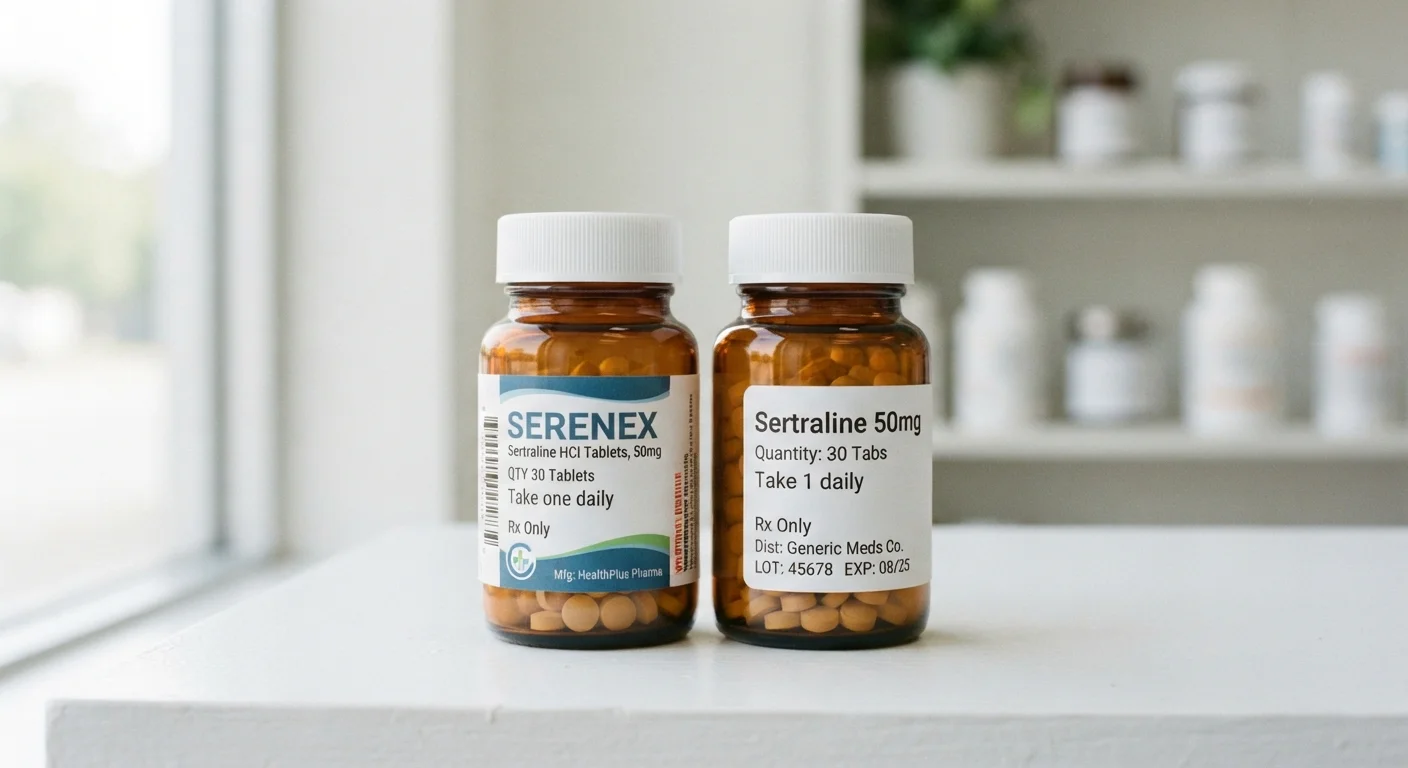
Photo: balancedlivingtools.net editorial
Key Takeaways
- The FDA requires generic drugs to deliver the same active ingredient at the same strength as the brand-name version.
- Inactive ingredients such as fillers and dyes can differ between generics and brand-name drugs, which matters for some patients.
- Generics typically cost 80 to 85 percent less than their brand-name equivalents, according to the FDA.
- A pharmacist is your best resource for understanding substitution rules and any documented switching concerns.
- Narrow therapeutic index drugs require extra caution when switching formulations; consult your prescriber first.
- Insurance formularies and manufacturer programs can affect which option is actually cheaper at the counter.
What the FDA actually requires of a generic drug
When a brand-name drug's patent expires, other manufacturers can apply to the FDA to sell a generic version. The FDA's approval pathway, called an Abbreviated New Drug Application (ANDA), requires the generic to contain the same active ingredient, at the same strength, in the same dosage form, and by the same route of administration as the original.
The key regulatory term is bioequivalence. A generic must reach the bloodstream at a rate and extent that the FDA considers equivalent to the brand-name drug. The standard allows a specific statistical range around the reference product, and both brand-name and generic batches naturally vary within manufacturing tolerances. The FDA states that generics cost 80 to 85 percent less on average than brand-name counterparts, making bioequivalence standards central to their value for families.
What the FDA does not require is that inactive ingredients match. Fillers, binders, dyes, coatings, and preservatives can differ between a generic and the original, and can differ across multiple generic manufacturers making the same drug. For most patients this has no clinical effect. For patients with allergies to specific dyes or additives, it can matter.
| Criterion | Brand-name medications | Generic medications |
|---|---|---|
| Active ingredient | Original formulation | Same, FDA-verified |
| Inactive ingredients | Fixed by manufacturer | May differ by maker |
| Bioequivalence standard | Reference product | Must meet FDA range |
| Average cost | Higher (often significantly) | 80-85% less on average |
| Appearance | Trademarked design | Different by law |
| NTI drug caution | Standard of comparison | Extra FDA scrutiny; consult prescriber |
| Insurance formulary tier | Varies; often higher tier | Typically lowest tier |
Where the two formulations can actually differ
Beyond inactive ingredients, appearance differs by design. Federal trademark law prevents a generic from copying a brand's color, shape, or imprint exactly, so a tablet that was white and round may become a different shade or size in its generic form. This sometimes causes patient confusion, particularly for elderly individuals managing multiple medications.
A second area of real clinical complexity is the narrow therapeutic index (NTI) category. NTI drugs are those where the difference between a therapeutic dose and a toxic dose is small. Certain anticonvulsants, warfarin, some thyroid hormones, and a handful of cardiac drugs fall into this group. The FDA applies additional standards to generic NTI drugs, but many professional organizations and prescribers still recommend consistency in the specific manufacturer's formulation once a patient is stable. If you take an NTI medication, discuss any potential switch with your prescriber before your pharmacist fills a different formulation.
For everything else, the practical difference at the level of therapeutic effect is not significant for most patients, which is why the FDA and most professional medical organizations support generic substitution as the default.
How cost and insurance shape the decision at the pharmacy counter
The sticker price difference between a generic and a brand-name drug is large, but what you actually pay depends on your insurance formulary. Formularies organize drugs into tiers; generics typically sit in the lowest tier with the smallest copay. Some brand-name drugs appear on formulary at a preferred tier if the manufacturer has a contract with your insurer, which occasionally makes a brand cheaper out of pocket than a non-preferred generic from a different manufacturer.
If you have no insurance or a high-deductible plan, cash prices vary significantly across pharmacies for the same generic. Your pharmacist can run a query, and some state pharmacy assistance programs offer additional discounts for qualifying households. The out-of-pocket cost for a brand-name drug without insurance can run many times the generic price for the same supply.
For families building a sustainable approach to routine prescriptions, understanding these formulary mechanics is as practical as knowing the science. See our guide to stocking a family medicine cabinet for a broader look at managing household medication costs without overspending.
Questions to ask your pharmacist before filling
Your pharmacist has access to ingredient lists, substitution records, and formulary details that are not printed on any label. Before filling or switching a prescription, these questions are worth asking:
- Is this drug on the narrow therapeutic index list, and does my prescriber want a consistent manufacturer?
- Which inactive ingredients differ between the brand and the generic available here today?
- Has my insurance formulary changed, and which formulation is in the lowest cost tier this year?
- If multiple generic manufacturers exist, can I request the same manufacturer each refill for consistency?
Pharmacists can also flag if a prescriber has written "dispense as written" on a prescription, which instructs the pharmacy not to substitute a generic without the prescriber's authorization. Knowing this before you arrive avoids surprises at the counter.
This article is for informational purposes only and is not medical advice. Always consult a qualified healthcare professional before starting, stopping, or changing any medication.
The content provided on our blog site traverses numerous categories, offering readers valuable and practical information. Readers can use the editorial team’s research and data to gain more insights into their topics of interest. However, they are requested not to treat the articles as conclusive. The website team cannot be held responsible for differences in data or inaccuracies found across other platforms. Please also note that the site might also miss out on various schemes and offers available that the readers may find more beneficial than the ones we cover.